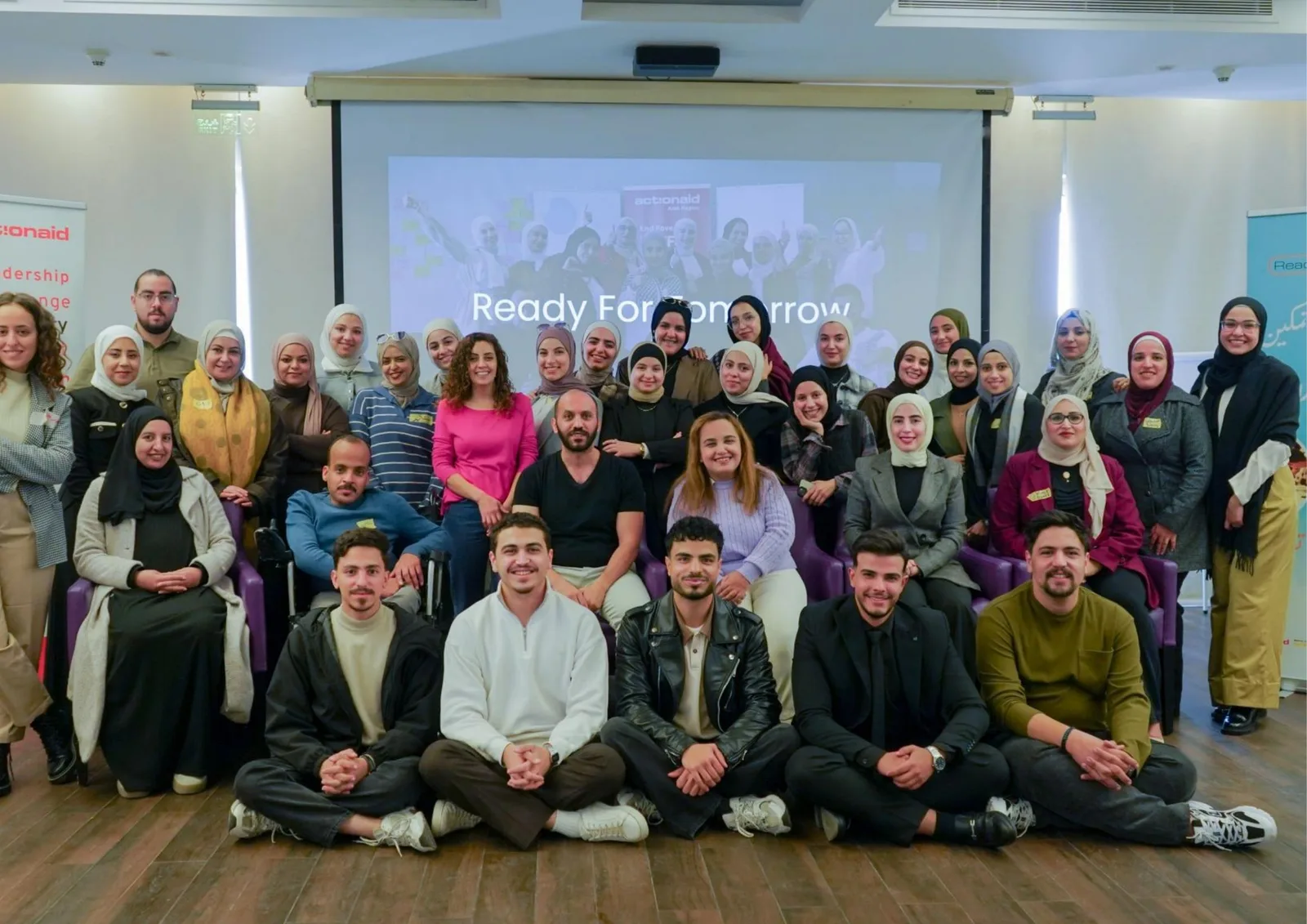
Over the past several years, a significant part of my professional journey has involved working with young people through training, program design, youth initiatives, community spaces, and team leadership. One of the experiences that made me rethink the way I work with different generations was leading a team at Liwan where a large part of the team was Gen Z. What started as an attempt to understand a younger generation gradually became something more useful: a chance to rethink how we build teams, develop capabilities, and create environments where people can learn and do their best work.
At first, I approached Gen Z the way many managers do. I wanted to understand what motivates them, how they learn, how they use technology, why they move quickly between tasks, and what a manager needs to do to keep them engaged. The more I worked with them, though, the less I believed the answer was a list of generational traits. What mattered more was understanding the environment that shaped them, and asking a different question: how do we take what this generation already brings and build on it?
Gen Z did not simply grow up in a faster world. They grew up in a world where tools, knowledge, platforms, and trends change constantly, while information arrives from dozens of directions every day. That naturally shapes how people learn, work, focus, and make decisions. I do not think that difference should be framed first as a weakness. As leaders, the more useful question is how to turn it into an advantage.
What I Appreciate Most About Gen Z Is Their Willingness to Learn
One of the clearest things I noticed while working with the Liwan team was how willing many of them were to learn through experimentation. In a lot of situations, I did not need to explain every step. I could clarify the outcome, hand them the challenge, and let them explore. Someone would come back having discovered a new tool, a different way of doing the work, or an idea that was not part of the original plan, simply because they had gone looking for a better way to reach the result.
That matters a great deal when I think about building teams today. What someone knows now is important, but their ability to learn what they will need tomorrow can be even more valuable. Tools change, ways of working change, and the skills we value evolve. Someone who knows how to learn, search, experiment, and adapt can become more valuable over time than someone with deep experience who is reluctant to keep developing it.
I see that as one of the real strengths of many of the Gen Z colleagues I have worked with, not because the generation is somehow better than the ones before it, but because the environment they grew up in made rapid learning and discovering new things feel normal. With the right support, that can become genuine learning agility inside an organization.
Someone who knows how to learn, search, experiment, and adapt can become more valuable over time than someone with deep experience who is reluctant to keep developing it.
And, Honestly, They Were Teaching Me Too
One of the best parts of leading a young team was realizing the relationship could never be one-way. I was helping them with leadership, planning, project management, teamwork, stakeholder communication, and navigating professional environments. At the same time, they were bringing me into areas that were not necessarily part of my own daily experience to the same degree.
They were often quicker to discover new platforms and tools, closer to emerging trends, and more connected to how younger audiences consume content and interact online. More than once, I found myself asking someone on the team, "How are people responding to this?" or "What tool could make this step easier?" That was part of leadership for me, not a compromise of it.
I think leaders who still see themselves as the only source of knowledge miss an enormous opportunity. When you work with younger generations, you are not simply managing people with less experience. You are also working with people who may have a different view of what is coming next: a tool before it becomes obvious to the organization, a trend noticed early, a shift in audience behavior others have not caught yet.
From Distraction to Attention Management
One of the subjects I think about most when working with Gen Z is distraction. This generation grew up surrounded by an extraordinary flow of information, notifications, platforms, content, and digital tools. Moving between subjects quickly has become part of everyday life, which means we cannot talk about focus in exactly the same way we did years ago.
I do not think the answer is to remove every distraction from a young person's life. That is unrealistic, and restriction by itself does not build a lasting capability. What we need to develop instead is the ability to manage attention: knowing what deserves focus now, what can wait, what does not need attention at all, and how to use digital tools without letting them run the work.
This is where something that first looks like a weakness can become a capability. Someone who can process a huge amount of information and learn to filter it, organize it, set priorities, and decide where to place their attention can have a real advantage. The challenge is not how much reaches the person. The challenge is how they handle it.
When a young colleague feels distracted, I try not to treat that as a judgment on their character. I would rather treat it as a skill that needs a system: clear priorities, structured responsibilities, protected periods of deep work, and regular space to review progress. The leader's role then becomes designing the system, not simply blaming the individual.
Capability Building Does Not Start and End With Training
The more I work with young people, the more convinced I become that capability building cannot be reduced to training. A course matters and knowledge matters, but the real skill begins when someone takes that knowledge into a real situation.
Giving someone responsibility for running a meeting may teach more than ten hours of theory about meetings. Asking someone to try a new tool and then discuss the results can be more useful than a long presentation about innovation. Giving someone ownership of part of a project, then sitting down afterwards to talk through what worked and what did not, creates a deeper form of learning than simply listening ever could.
I see development as a continuous cycle: experience, reflection, feedback, improvement, and another attempt. People do not build a skill because they know its definition. They build it by practicing, making mistakes, receiving feedback, adjusting, and trying again.
People do not build a skill because they know its definition. They build it by practicing, making mistakes, receiving feedback, and trying again.
Developing the Ofuq Guide Showed Me This Even More Clearly
One of the experiences that made this idea especially clear to me was developing the Ofuq Guide. I did not build it from the assumption that I already knew exactly what young people needed and that their role was simply to use the finished product. Gen Z input was part of the development process itself. We listened to their views, their experiences, and the way they understood the needs and challenges we were writing for, and that made a real difference to the guide, its content, and how it could actually be used.
What mattered most to me was seeing how the people who will actually use a product can add value that a design or management team cannot create on its own. Young people did not only look at what we had written. They thought about how they would actually use it, what felt intuitive, what felt complicated, and what could be made more practical.
That changed the way I think about youth-focused programs and tools. Participation is not asking young people at the end whether they like what you created. Real participation means their voice is present during the design process itself.
When we worked that way on the Ofuq Guide, I did not only feel the product became better. I also learned to think differently about how we build tools in the first place. That is one of the most valuable things about working with Gen Z: you are not only developing them. They can reshape the way you work too.
Participation is not asking young people at the end whether they like what you created. Real participation means their voice is present during the design process itself.
I Do Not Want to "Manage Gen Z." I Want to Build a Team That Learns From Itself
After working with teams for a while, it is easy to fall into the trap of searching for the "right" way to manage each generation. I do not think that approach takes us very far, because workplaces are becoming multigenerational anyway.
On the same team, you may have people born in the early 1990s, including those born between 1990 and 1994, alongside Gen Z, and in the years ahead Gen Alpha will become part of education and work in increasingly visible ways. If we treat each generation as a separate box, we end up spending our energy solving the wrong problem.
What matters more is understanding what each generation brings to the team, and what each one can learn from the others. Someone with more years of experience may have a deeper understanding of institutions, relationships, complexity, and long-term decisions. A younger colleague may bring faster learning, greater openness to new tools, stronger awareness of emerging trends, and more comfort with changing digital environments.
Try to make everyone work exactly the same way, and you lose part of that value. Build a team where differences can show up inside a clear framework, and those differences become a competitive advantage instead.
Multigenerational Teams Need Mutual Learning
One of the best things that can happen in a multigenerational team is that people stop asking "Who knows more?" and start asking "What does this person know that I do not?"
A younger colleague may introduce a more experienced teammate to a tool that saves hours of work, explain how a certain audience is changing its behavior, or offer a different read on an emerging trend. In return, the younger colleague may learn how to manage a crisis, handle a sensitive decision, build a professional relationship over time, or understand the organization rather than just the task in front of them.
That relationship is not always mentor and trainee. Sometimes everyone is learning, just from a different angle. At that point, age diversity becomes more than a number in the team structure. It becomes a source of knowledge.
Clear Expectations With Room to Move
One lesson I have taken from leading young teams is that freedom works best when it comes with clarity. You cannot simply tell someone "be innovative" without explaining the outcome, what success looks like, or the boundaries they need to work within.
I prefer to define the problem, the desired result, the available time, and the key constraints, then give the person room to decide how to get there. That keeps expectations clear while leaving enough space to experiment, search, and use the tools they know.
That is where some of the strongest qualities of Gen Z show up. You are not asking them only to execute. You are giving them space to discover, suggest, and test, and their approach may turn out to be better than the one you would have chosen yourself.
Leading Across Generations Starts With Understanding the Person
Perhaps this is the clearest conclusion I have reached: generations matter, but they are not everything. I may want to know whether someone is Gen Z or from an older or younger generation, but I care more about how they learn, what motivates them, how they like to receive feedback, how they handle pressure, where they are strongest, and where they need support.
You can find two people from the same generation who need completely different management approaches. You can also find someone from an older generation with more flexibility than someone much younger. A leader who relies only on age categories will eventually discover that reality is more complicated than the label. A generation gives us context. It does not tell us who the person is.
And What About Gen Alpha?
Even when I think about Gen Alpha, I am less interested in asking how we will "manage" them and more interested in asking whether our institutions are ready to learn and change. A generation that grew up in a deeply digital environment, with smart tools and interactive technology from an early age, may enter education and work with different expectations around speed, personalization, access to knowledge, and how tasks get done. That can create challenges, but it can also create real opportunities.
If Gen Z has taught us anything, it is that younger generations do not enter institutions only to learn from them. They also test the institutions themselves. Are they flexible? Do they listen? Can they learn? Do they make room for ideas coming from below? Can they change when the world around them changes?
In the End, Working With Gen Z Has Taught Me More Than I Taught Them
The thing I value most about my experience with Gen Z is that I did not come away with a checklist for "how to manage Generation Z." I came away with a simpler and deeper idea: if you want to build a strong team, do not try to make everyone a version of the same person.
At Liwan, I learned from the young people I worked with how learning agility can become part of a team culture, how openness to new tools can create better ways of working, and how paying attention to trends can become a source of understanding rather than passive consumption. Through developing the Ofuq Guide, I saw even more clearly why young people should be part of the design process itself, with their input treated as part of building the product rather than feedback collected at the end.
Our role as leaders is to help young people turn their energy, curiosity, and ability to learn quickly into sustainable professional capabilities: managing attention, setting priorities, taking responsibility, navigating complexity, learning from failure, and working with people who think differently. That is also what leadership development means to me in a multigenerational team.
Because in the end, we do not need managers who simply know how to "deal with Gen Z." We need leaders who can build teams that learn from the people inside them, across differences in age, experience, and ways of thinking.
And perhaps that is one of the best things about working with younger generations: you are not only preparing them for the future. Through them, you get a chance to see that future a little earlier. They learn from us how to build on what came before, and we learn from them how to prepare for what is coming next.
They learn from us how to build on what came before, and we learn from them how to prepare for what is coming next.
Related reading: see also how student councils build early leadership skills, or explore why most leadership programs fail.
Frequently Asked Questions
Found this useful? Share it with your network.
 Share on LinkedIn