What Happens to Our Personality When We Speak Another Language?
Have you ever felt like a different person when speaking a language other than your mother tongue? Perhaps you become quieter, find it harder to joke, or struggle to express an opinion in the way you normally would. Others may read you as hesitant, even when you know exactly what you want to say. This raises a question worth considering: has your personality actually changed, or has the new language changed how much of it other people can see?
Language is more than a collection of words and grammar rules. It is the space through which we express ideas, build relationships, and show humour, confidence, assertiveness, and even uncertainty. When we move into a new language, we may bring the same ideas and experience with us, yet temporarily lose some of the tools that help us express them.
The Experience We Have, and the Language We Use to Express It
For me, Arabic is the language through which I have built much of my experience and professional identity. It is where I learned to explain ideas, facilitate discussions, persuade others, and navigate complex situations. These abilities developed through years of experience, practice, and interaction with people.
When we use our first language in a familiar environment, we draw on more than vocabulary. We also rely on a memory of expressions, jokes, cultural cues, and ways of responding that have accumulated over time. In a second language, we may need to think about word choice, sentence structure, and tone while also following the discussion, understanding others, and making decisions.
That extra effort can make someone appear less spontaneous or confident than they really are. People around them may confuse limited expression in a new language with limited ability itself. Yet the ability to lead a team, analyse a problem, or build a professional relationship does not disappear simply because someone is searching for the right word.
Malik’s Experience: When a Leadership Personality Needs a New Language
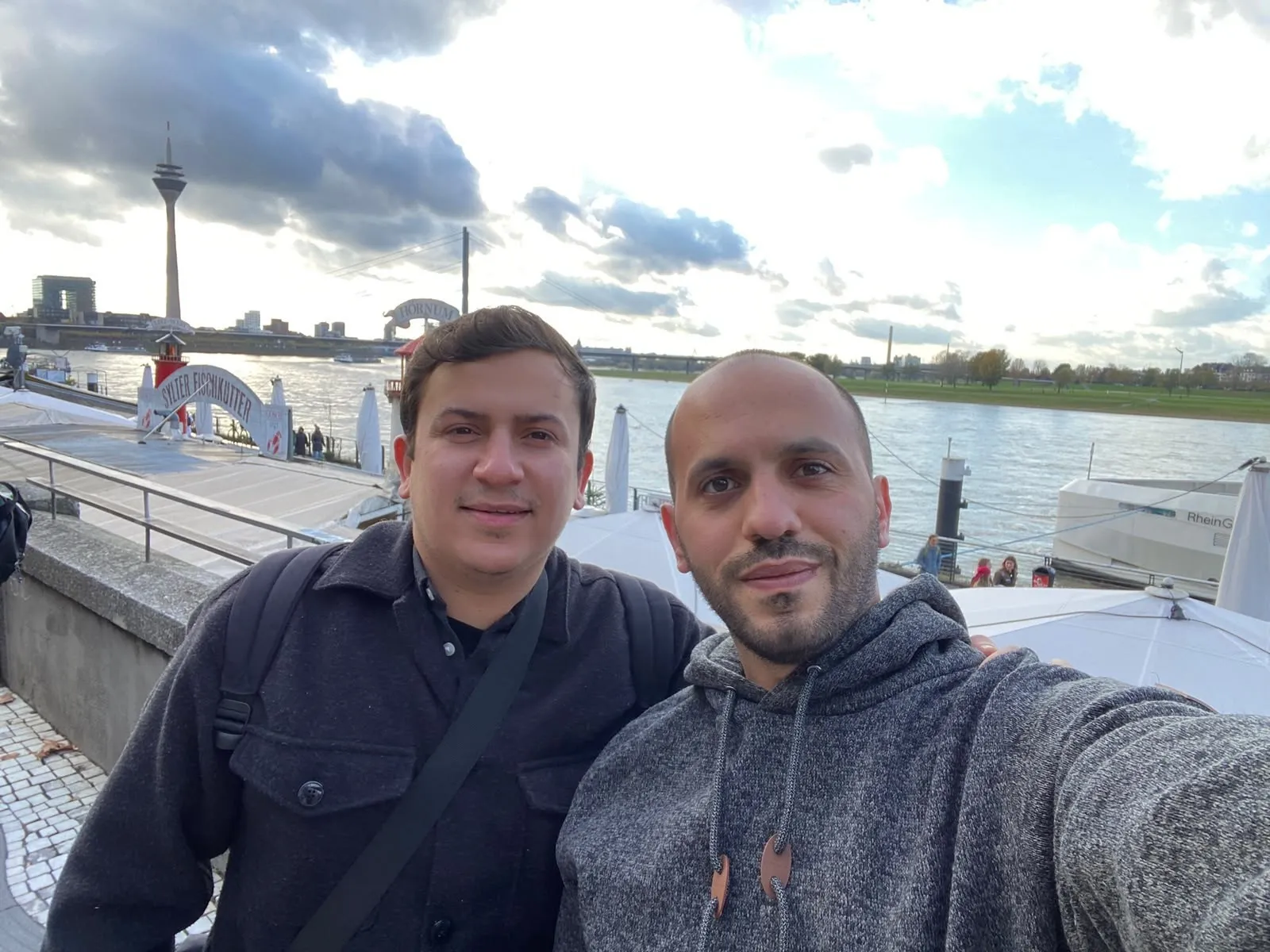
In a conversation with my friend Malik Al-Zoubi, we discussed his experience of moving to Germany. Malik had been one of the people with a strong leadership presence in Jordan, but language became a challenge during the early stage of his new experience. The challenge was not only about learning words. It was also about expressing himself in the way others had come to expect, and in the way he understood himself.
As his German improved day by day, he became better able to communicate his ideas, participate with greater confidence, and show aspects of his leadership personality that had already been there. What changed was not necessarily the core of his personality, but the space available to express it.
His experience reminds us that moving to a new country or working in another language can put someone in a position where they seem to be starting from behind in communication, even when they bring years of experience. It can take time to rebuild a social and professional presence in an environment whose language and cultural cues are still unfamiliar.
Do We Have a Different Personality in Every Language?
Researchers in psychology and linguistics have explored the relationship between language, cultural context, and how people express their personalities. Some findings suggest that bilingual people may describe themselves or express certain traits differently depending on the language and context they are using. This does not mean they have two entirely separate personalities, or that learning a new language remakes a person from the ground up.
A language can open a door to a different social context. In some cultures, disagreement may be expressed directly; in others, it may call for more careful wording. Humour, formality, and the ways people show respect or objection are also shaped by the social norms surrounding a language. Over time, people may learn to adapt their style to the context without losing their identity.
It is also important not to attribute every change to language alone. Migration, working in a new environment, social relationships, and the degree of safety and confidence a person feels can all influence behaviour. Language is part of the picture, but it is not the whole picture.
Why This Matters for Work and Leadership
In multilingual workplaces, a person who speaks the language of a meeting fluently may get more airtime and influence, even if they are not the most experienced person or the one with the strongest idea. Meanwhile, an expert or manager may hesitate to contribute because they need extra time to formulate their thoughts. If we judge competence only by response speed or conversational fluency, we may misread people’s capabilities.
This does not mean clear communication is unimportant. The ability to convey an idea is a core part of work, and each of us has a responsibility to develop our language and communication skills. Leaders, however, also have a responsibility to create conditions in which people can demonstrate their abilities: allow time to think, share key points in advance, avoid interrupting, use clear language, and evaluate the quality of an idea alongside how it is delivered.
These practices do not lower standards. They help us measure the right things. Instead of asking only, “Who speaks with the most confidence?” we can ask: Who understands the problem? Who offers sound analysis? Who learns quickly? And who can take responsibility and turn an idea into a result?
How Can We Help Ourselves and Others Through This Stage?
If you are learning a new language, do not let your current level of fluency become a verdict on your value or competence. Give yourself room to practise, ask for clarification when you need it, prepare for important meetings, and build vocabulary around situations that recur in your work. Most importantly, distinguish between finding expression more difficult and becoming less capable.
If you lead a team whose members work in different languages, pay attention to the difference between silence and a lack of knowledge, or between hesitation and a lack of commitment. Some people may need extra time to find the words, but that does not mean they have nothing worth hearing. Ask for their views, create more than one way to participate, and give ideas a chance to emerge before judging the people behind them.
A new language requires practice, but it also requires an environment where learners can use it without every mistake becoming evidence of incompetence. In such an environment, learning accelerates, confidence gradually returns, and people can connect what they already know with the new tools they are developing.
A New Language, a Wider Space for Expression
Perhaps a new language does not make us different people so much as reveal parts of us that were previously difficult to express. It may also lead us to discover new ways of thinking and communicating, and to reconsider some of our habits. But our identity cannot be reduced to our proficiency in one language, just as our competence cannot be measured by how quickly we can retrieve words.
When we meet someone who speaks our second language hesitantly, it is worth remembering that what we see may be the limits of expression in that moment, not the limits of their experience or personality. And when we are that person, we should remember that needing extra time does not erase what we have learned or what we can contribute.
Ultimately, learning a new language means learning a new way to communicate with the world, and perhaps a new way to show ourselves within it. The question I keep returning to is this: when we speak a new language, do we become different people, or do we simply need time to show others who we have been all along?
Found this useful? Share it with your network.
 Share on LinkedIn