Some journeys begin at the airport. Ours began much earlier, on a laptop screen.
Dates, cities, distances, travel times, activities, bookings, optional stops, and a route connecting Tbilisi, Kazbegi, Batumi, and eventually Trabzon in Türkiye. From there, we would return to Batumi, take the train back to Tbilisi, and finally fly to Riyadh.
By the time the itinerary was finished, it looked less like a vacation plan and more like something from my professional life:
a Gantt Chart.
Perhaps a project manager never completely switches off.
At first, the reason was purely practical. We had a limited number of days, Georgia offered far more experiences than we could fit into a single trip, and we wanted to make the most of our time without spending every morning searching for what to do next, comparing routes, calculating distances, or trying to squeeze another activity into an already full day.
What I did not expect was that this simple travel plan would become one of the most interesting parts of the experience.
Because somewhere between the streets of Tbilisi, the dramatic landscapes of Kazbegi, the Black Sea in Batumi, and the road into Türkiye, I realized something:
Good planning does not take freedom away from an experience. It creates the space to enjoy it.
And that idea followed me throughout the journey, not only as a traveler, but also as someone who spends much of his professional life thinking about projects, people, strategy, and leadership.

Why Georgia Deserves a Place on Your Travel List
If Georgia is somewhere on your travel list, there is one thing worth knowing before you go:
Georgia is difficult to capture in a single image.
That may be one of its greatest strengths as a destination.
Within one trip, you can wake up in a capital filled with old streets, cafés, architecture, and urban energy; find yourself surrounded by the Caucasus Mountains a few days later; and eventually end up walking beside the Black Sea.
You can combine culture, nature, mountains, road trips, food, city life, and the coast without needing to build several separate vacations around them.
Our route was:
Tbilisi → Kazbegi → Batumi → Trabzon → Batumi → Tbilisi
But looking back, it never felt like a sequence of pins on Google Maps.
Every time we left one destination, the rhythm of the trip changed with it.
Tbilisi introduced us to Georgian city life and the contrast between old and new. Kazbegi replaced streets and buildings with valleys, mountain roads, and the scale of the Caucasus. Batumi changed the atmosphere again with the Black Sea and a slower coastal rhythm. Crossing into Trabzon added another dimension entirely: traveling overland from one country into another and watching the culture, language, and surroundings gradually change rather than experiencing that transition through an airport terminal.
Even the return became part of the story. We crossed back into Georgia, returned to Batumi, took the train to Tbilisi, and eventually flew to Riyadh.
By the end, we had experienced Georgia and the wider Black Sea region by plane, car, road, border crossing, train, and countless kilometers on foot.
It felt less like visiting several destinations and more like moving through different chapters of one continuous journey.
And the reason we could experience so much without constantly feeling like we were racing against time takes me back to where everything started:
the plan.
Before Georgia: When a Gantt Chart Became Part of the Vacation
When planning a trip to Georgia, the problem is rarely finding things to do.
The problem is choosing between them.
You could easily spend several days exploring Tbilisi alone. You could build an entire trip around Georgia's mountain regions. Batumi and the Black Sea deserve their own time, while the roads between these destinations offer viewpoints, towns, restaurants, and experiences that can quickly turn a simple itinerary into an overwhelming list.
So instead of planning around an endless collection of attractions, we planned around a route.
We divided the trip into destinations, identified the major travel days, selected the experiences we genuinely did not want to miss, and kept other activities optional depending on our energy, weather conditions, and available time.
That distinction became important.
Our itinerary was detailed, but it was never meant to become a contract.
It was a framework.
And once we arrived in Georgia, something interesting happened: we did not have to spend the entire trip managing the trip.
We could actually experience it.
For me, the worst possible outcome was never missing one tourist attraction. It was spending the vacation staring at our phones, searching, comparing, calculating distances, and debating every morning about where to go next.
Planning moved much of that mental load to the days before departure and gave us more space to be present once the journey began.
That became my first leadership reflection from the trip:
Clarity before execution creates freedom during execution.
The same principle applies to teams.
When people understand the destination, priorities, resources, and timeline, leadership does not need to become constant supervision. Good structure gives people enough clarity to move, adapt, and make decisions.
The itinerary did exactly that for us. It gave us structure without taking away spontaneity. It is a principle I come back to often when designing leadership programs that need to survive contact with the real world, not just look good on a slide.
Tbilisi: A City You Should Not Try to Understand Too Quickly
Our journey began in Tbilisi, and for a first visit to Georgia, I cannot think of a better introduction.
There is something fascinating about the contrasts within the city.
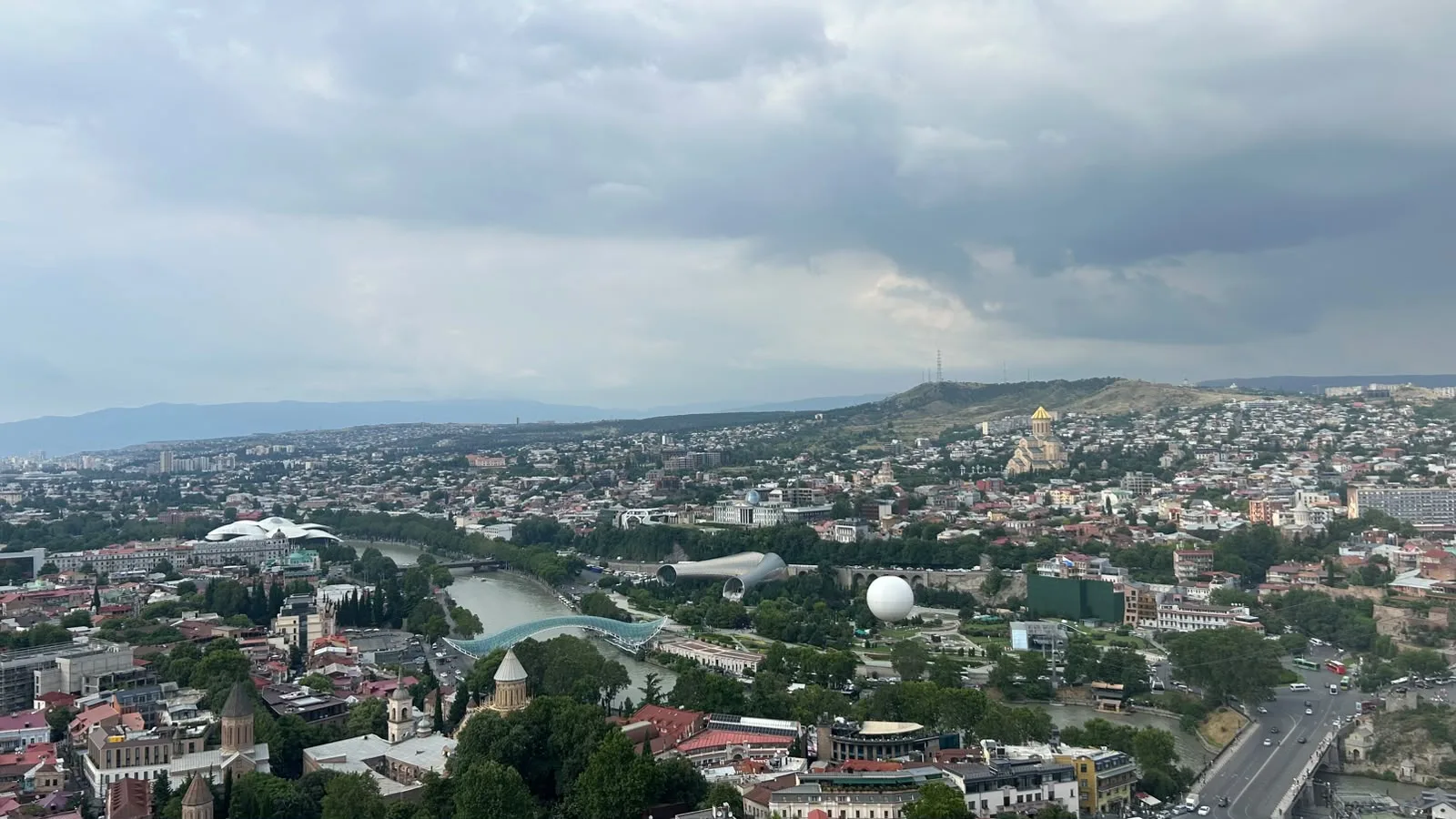
You can walk through narrow streets surrounded by old buildings and distinctive wooden balconies, then find yourself in a more contemporary part of Tbilisi shortly afterward. History occupies one corner while cafés, restaurants, creative spaces, and modern city life appear around the next.
The city does not ask you to choose between old and new. It seems comfortable carrying both.
And in Old Tbilisi especially, I discovered that one of the best things you can do is surprisingly simple:
walk.
Do not experience the entire city through a car window.
Take a street that was not on your itinerary. Stop when something catches your attention. Look at the architecture. Sit somewhere longer than expected. Watch people go about their day. Listen to a language you may not understand and slowly begin to absorb the rhythm of the place.
Not every meaningful travel experience needs to have a reservation attached to it.
Tbilisi also introduced another dimension to the journey: experiencing Georgian culture rather than simply visiting Georgian attractions.
Whenever we enter another country, we carry an invisible suitcase with us.
It is filled with assumptions.
How should strangers interact? What does good service look like? How directly should people communicate? What does friendliness look like? What behaviors do we automatically interpret as respectful, or unfriendly?
During the first few days in a new culture, it is easy to judge those interactions using our own cultural expectations.
But eventually, you begin to realize:
Different does not necessarily mean wrong. Sometimes, it simply means different.
And suddenly, I was thinking about leadership.
In multicultural workplaces, we often make exactly the same mistake.
We interpret silence as disengagement. Direct communication can be perceived as aggression. A different relationship with hierarchy can be mistaken for a lack of initiative. A communication style different from ours can easily become a judgment about the individual rather than an attempt to understand the context behind the behavior.
That is why I increasingly believe Cultural Intelligence (CQ) is becoming one of the most important capabilities for modern leaders.
Cultural intelligence does not mean memorizing facts about every culture in the world.
It means developing enough curiosity to understand people before judging them, and enough humility to recognize that our own way of seeing the world is not the universal standard.
Travel has a remarkable way of reminding us of that.
The Road to Kazbegi: When the Journey Becomes the Destination
If Tbilisi introduced us to Georgia through its people and city life, the road toward Kazbegi introduced us to another Georgia entirely.
This was not transportation from point A to point B.
The road itself became part of the destination.
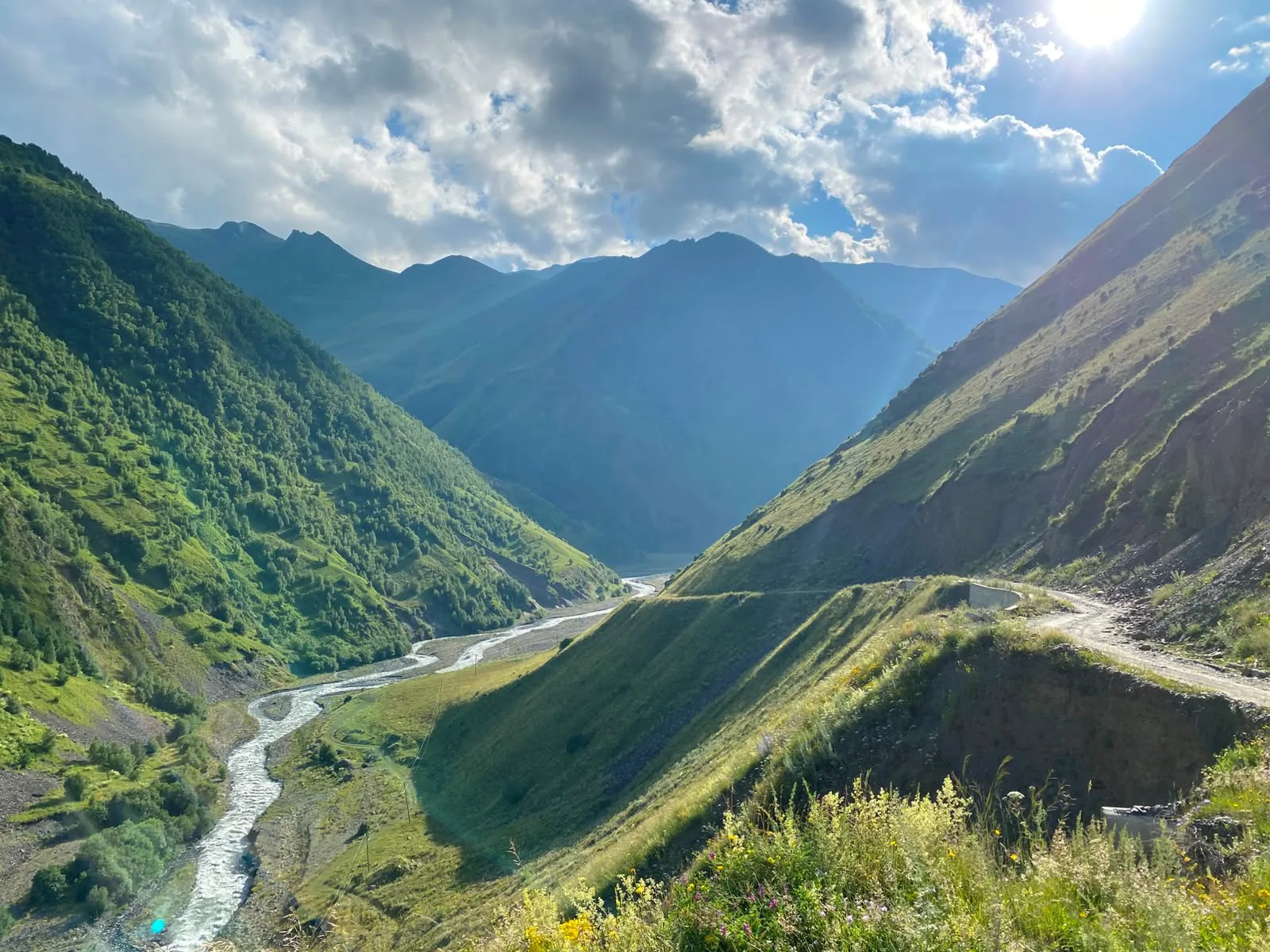
As we moved toward the Caucasus Mountains, the city gradually disappeared behind us. Buildings gave way to open landscapes, valleys, winding roads, green slopes, and increasingly dramatic mountains.
There is a particular moment on a road like this when you look through the window and realize that you are no longer in a hurry to arrive.
That happened to me on the way to Kazbegi.
Our driver was excellent, and we felt comfortable and safe throughout the journey. That made a significant difference because on a route like this, you want the freedom to look around and absorb the landscape instead of treating the drive as several hours that need to be completed.
And the views were extraordinary.
Some destinations photograph beautifully. Others remind you of the limitations of a camera.
For me, the Caucasus Mountains belong to the second category.
As the mountains begin to surround you, your sense of scale changes. Cars, buildings, and roads suddenly look like tiny details inside an enormous landscape.
If you are building your own Georgia travel itinerary, my advice is simple: do not treat the journey from Tbilisi to Kazbegi as wasted travel time.
Give the road space in your schedule. Stop. Look around. Take photographs. Have something to drink. Allow yourself to enjoy a viewpoint without immediately checking how many minutes it has added to your arrival time.
Some roads deserve to be experienced, not optimized.
And once again, travel brought me back to leadership.
At work, we often become obsessed with milestones and deliverables. When will we arrive? When will we finish? What comes next?
Yet some of the most valuable things that happen within a team occur between those milestones: learning, conversations, mistakes, course corrections, trust, and relationships developed during execution.
The destination matters. But the road shapes who arrives there.
Kazbegi: A Place That Makes You Slow Down
Arriving in Kazbegi feels completely different from arriving in Tbilisi.
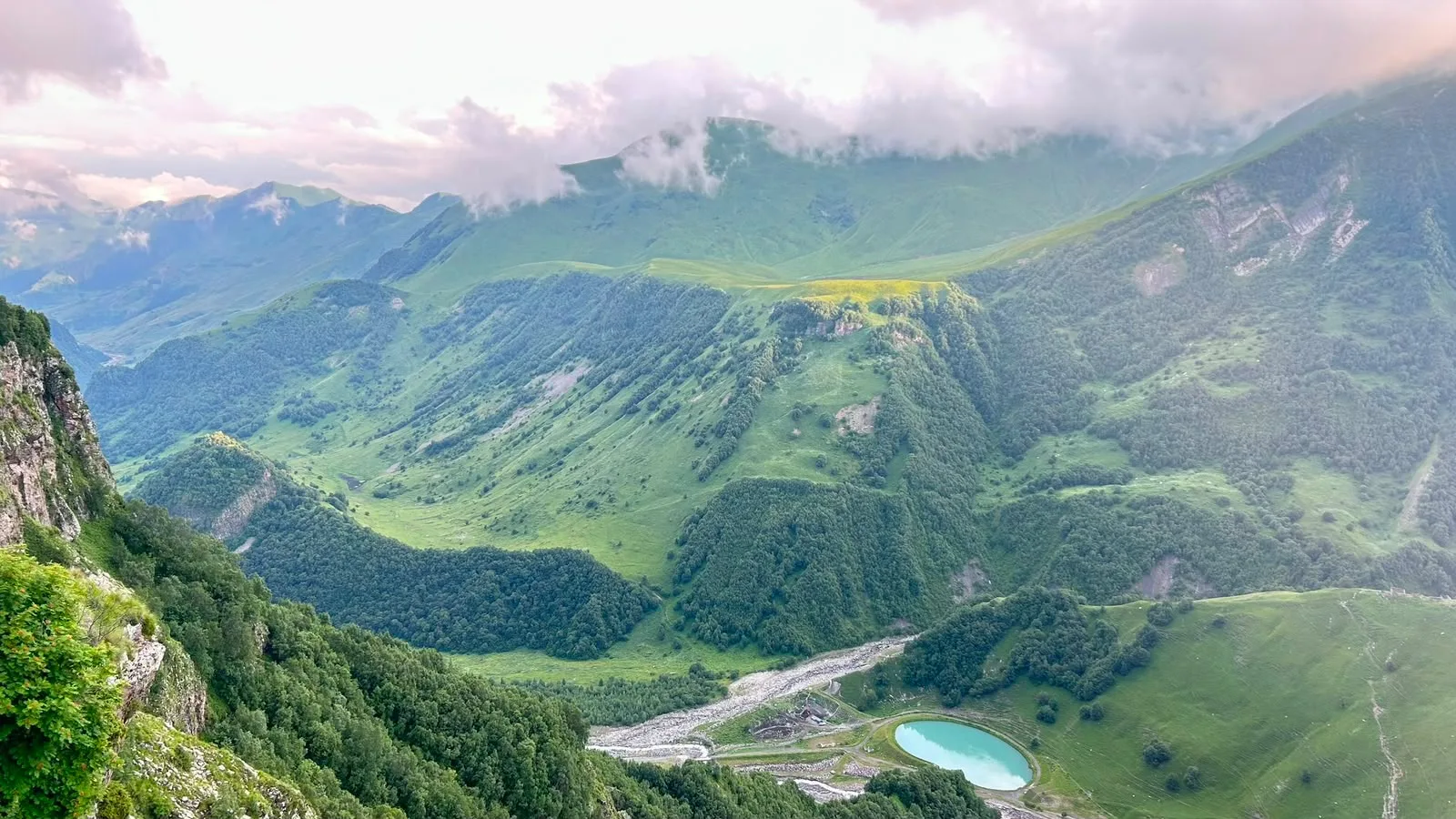
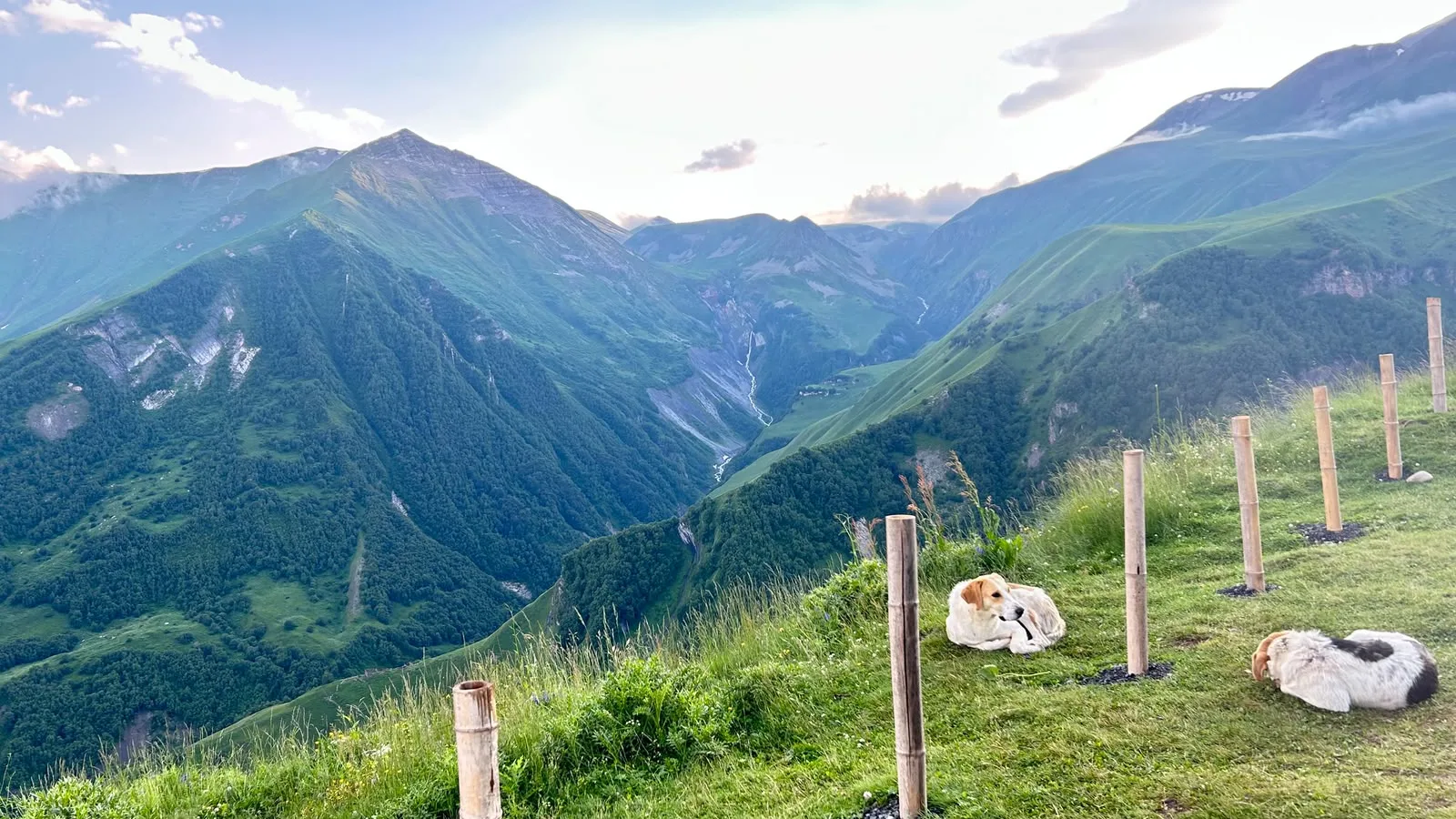
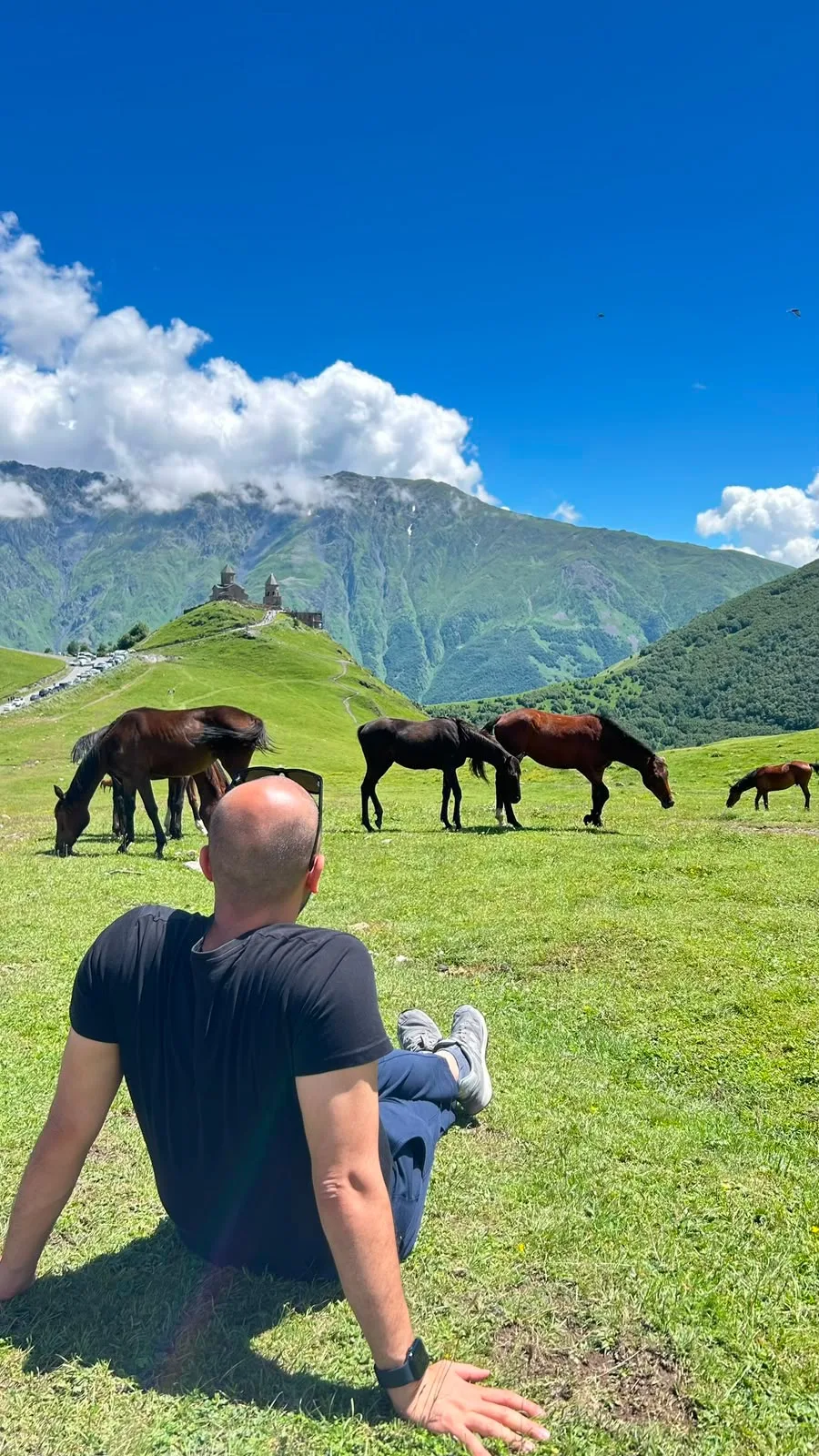
Here, nature becomes the main character.
The air, elevation, mountains, valleys, and open landscapes naturally change the rhythm of the day. One of the area's most recognizable scenes is Gergeti Trinity Church, sitting against the dramatic backdrop of the Caucasus Mountains.
It is the kind of landscape that makes you stop talking for a moment and simply look.
Kazbegi also reminded me that not every destination needs to be filled with activities.
Sometimes, being somewhere is the activity.
Walk. Look at the mountains. Stop somewhere with a view. Take your time.
If you are planning your own trip to Georgia, resist the temptation to fill every day from early morning until late at night simply because another activity technically fits into the schedule.
Our itinerary gave us the possibility of doing many things, but the structure also helped us recognize when doing less would actually give us more.
That brought me back to a principle that applies equally well to project management:
Capacity is not the same as priority.
Just because a team can execute ten things does not mean it should execute all ten.
Sometimes the quality of a strategy is visible not in how much it includes, but in what it deliberately leaves out.
The same applies to travel.
You do not need twenty photographs from twenty attractions to prove that you experienced a destination.
Sometimes one afternoon in the right place is enough.
From the Caucasus Mountains to the Black Sea: Batumi
Then Georgia changed again.
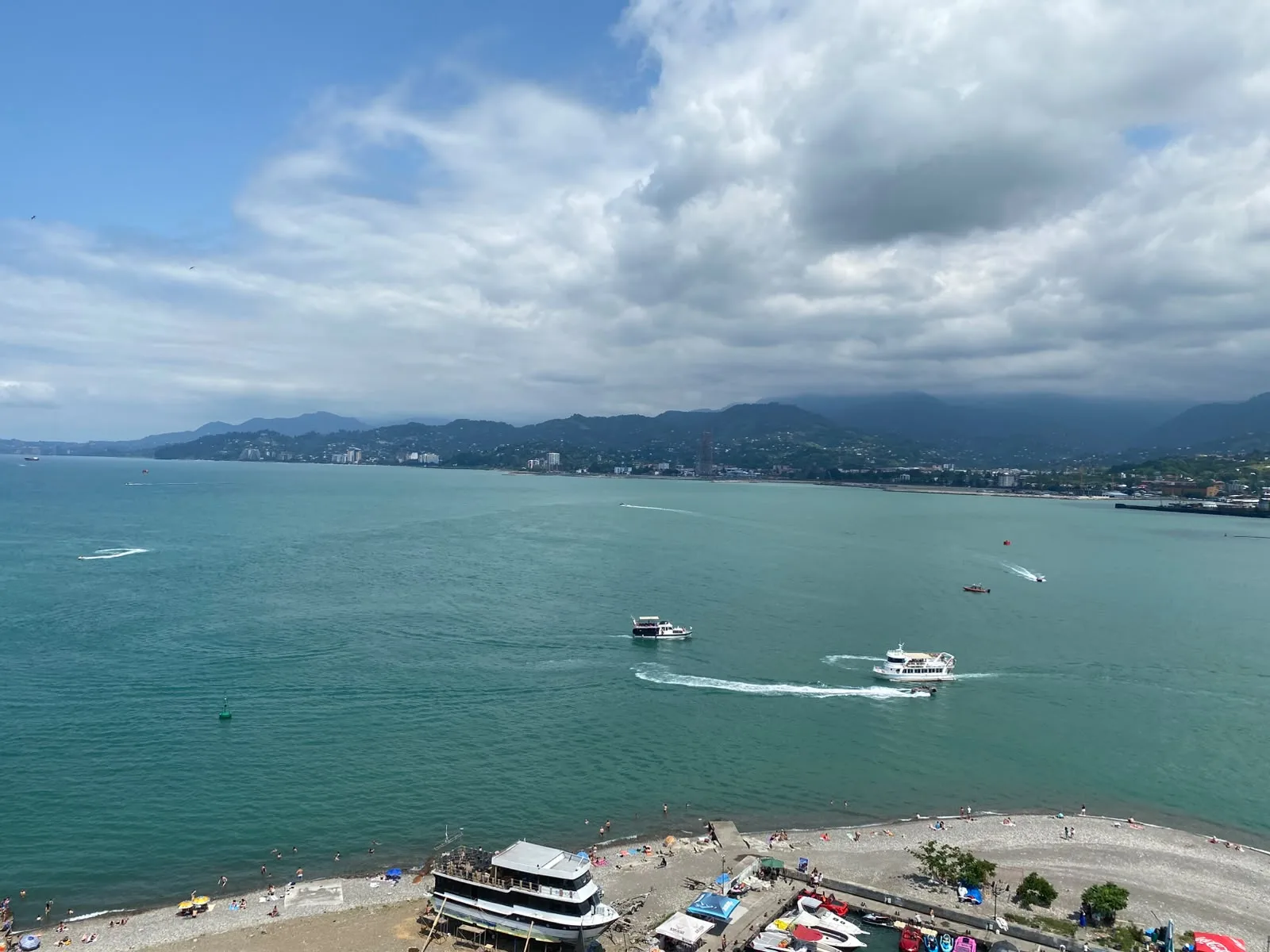
We left the mountain landscapes behind and eventually arrived in Batumi, on the Black Sea.
The transition was striking.
After mountain roads, valleys, and dramatic elevations came the sea, the long boulevard, open spaces, modern architecture, and a city whose energy seemed to become more noticeable as the evening approached.
After the mountains, being beside the water felt like a reset.
And Batumi helped me understand why Georgia can appeal to very different travelers.
If you enjoy city life, history, culture, architecture, cafés, and walking through old and modern neighborhoods, Tbilisi offers plenty to explore.
If you are traveling for mountains, nature, and road trips where the journey is part of the experience, Kazbegi delivers something completely different.
And if you want the sea, long walks, coastal evenings, and another pace entirely, Batumi gives the trip a third personality.
The best part? You do not have to choose.
You can experience all three within one relatively compact journey.
That variety is one of the strongest reasons I would recommend Georgia to travelers who want a trip where each destination feels genuinely different from the previous one.
Planning a Georgia Trip? Do Not Turn It Into a Checklist
This may be the most practical travel lesson I brought home:
Plan well, but do not plan every moment.
Choose the destinations you want to visit. Understand the distances between them. Identify your heavy travel days before you arrive. Book the experiences that genuinely require advance planning and identify the places you would regret missing.
Then leave some empty space.
Because some of the best moments of a trip will never appear on your Gantt Chart, no matter how detailed it is.
It might be a view along the road that makes you stop the car. It might be a street in Tbilisi that was never on your list. It might be sitting in Kazbegi longer than expected because you simply do not want to leave the view yet. It might be an evening walking beside the Black Sea in Batumi without any particular destination.
Our formula became:
Plan the structure. Give the experience room to breathe.
A plan should not make you a prisoner of the itinerary.
The real value of good planning appears when it gives you enough confidence to know when you can safely ignore the plan.
Batumi Was Not the End: Crossing Into Trabzon by Road
One of the most memorable parts of our route was that we did not leave Georgia for Türkiye through an airport.
From Batumi, we continued toward Trabzon by road.
That added a completely different dimension to the journey.
There is something special about waking up in Georgia, packing your bags, heading toward a land border, and finding yourself in another country a few hours later.
Airports compress international travel. You leave one terminal and appear in another.
Road travel allows you to watch the transition happen.
Our transfer to Trabzon had already been built into the itinerary, so the travel day itself became part of the experience rather than a lost day between destinations.
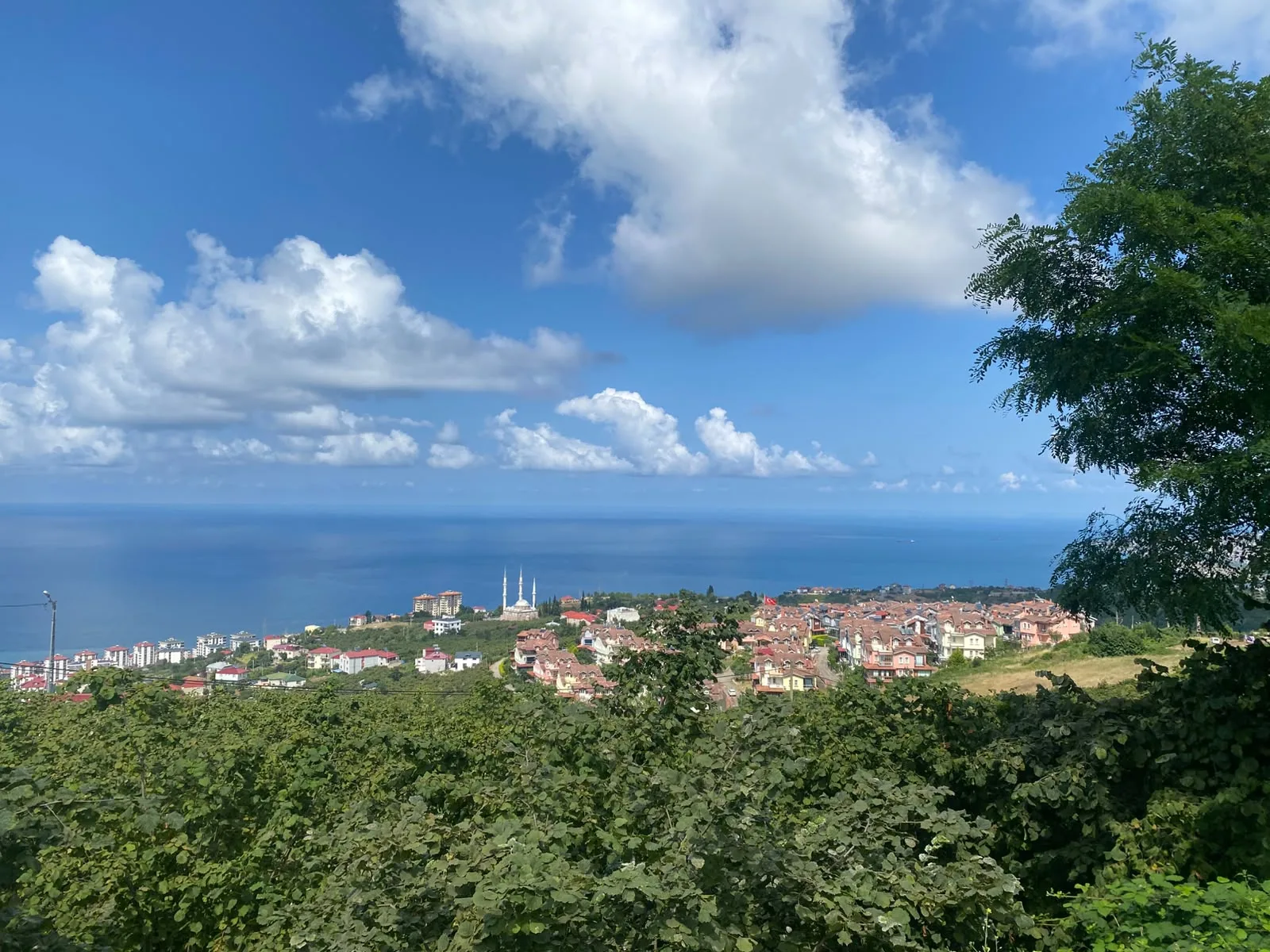
The Black Sea remains part of the landscape. The greenery continues. But gradually the language, road signs, culture, and details of everyday life begin to change.
Trabzon also introduced another version of nature to the journey. After the dramatic Caucasus landscapes around Kazbegi and the coast in Batumi, the mountains and deep greenery of Türkiye's Black Sea region created another visual chapter.
It did not feel as though one trip had ended and another had begun.
It felt like the same story continuing on the other side of a border.
That experience brought me back to another essential leadership capability:
Adaptability.
Every new environment requires us to read the context again.
The leadership approach that works for one team may fail with another. The management style that works during one phase of a project may become ineffective during the next.
Adaptability does not mean losing direction.
It means being willing to change the route while remaining clear about the destination.
Back to Georgia, This Time by Train
Trabzon was not the final chapter either.
We crossed back into Georgia, returned to Batumi, and from there began another completely different travel experience: taking the train back to Tbilisi.
At that point, I realized that this single trip had given us an unexpected collection of transportation experiences.
We arrived by plane. We traveled between cities and mountains by road. We crossed an international border overland. We returned and traveled across Georgia by train. Eventually, we boarded another flight from Tbilisi to Riyadh.
Each mode of travel gave the journey a different rhythm.
Traveling by car gave us the freedom to stop, change pace, and experience the road.
Crossing the border by land made the transition between countries tangible.
The train gave us something else: the chance to sit back and watch Georgia move past the window without having to think about the road ahead.
And returning to Tbilisi was surprisingly interesting.
The city was physically the same, but our relationship with it had changed.
On our first arrival, everything required interpretation. We were learning how to move through the city and trying to understand the place.
When we returned, some streets and patterns felt familiar. Moving around was easier. The city had become, even if only slightly, known.
Perhaps places do not always change between our first and second visit.
Sometimes we do.
How Georgia Made Cultural Intelligence More Real to Me
We can read dozens of articles about diversity, inclusion, and leading multicultural teams.
But those ideas feel different when you become the outsider.
You are the person who does not understand the language. You do not know the unwritten rules. You need to ask questions. You misread signals. You discover that things you assumed were obvious are not obvious at all.
Travel temporarily returns you to the role of a beginner.
I think that is a valuable experience for any leader.
The more professionally experienced we become, the easier it is to forget what it feels like not to know.
Think about a new employee joining an established organization, someone moving to another country for work, or a team member entering a workplace where everyone else already understands how things operate.
They are not only learning their job. They are decoding an entire unwritten culture.
How do people communicate here? How are decisions really made? Can I disagree openly? Who actually has the final say? What does "urgent" mean in this organization? What happens when someone makes a mistake?
A leader who remembers what it feels like to be unfamiliar with a place may become much more intentional about how other people are welcomed, supported, and integrated. It is the same thinking I bring into how organizations across the Gulf are building human capital for an increasingly multicultural workforce.
Perhaps that is one of travel's most valuable lessons.
We travel to understand other places. Sometimes, we return understanding our own assumptions better.
Five Lessons I Brought Home From Georgia
Looking back, five ideas stayed with me, and none of them feel purely theoretical anymore.
1. Planning creates freedom when it remains flexible. Our Gantt Chart was never the purpose of the trip. It was a tool that helped us use our time intentionally, reduce unnecessary decisions, and create more room to enjoy the experience. Good planning should make execution lighter, not heavier.
2. The road is part of the outcome. The drive toward Kazbegi, crossing the border into Trabzon, and taking the train from Batumi back to Tbilisi were technically transportation, yet they became some of the memories that defined the journey. Projects work the same way. How we reach an outcome can matter almost as much as the outcome itself.
3. Capacity does not equal priority. We could have added more activities to almost every day, but the quality of the trip was not measured by the number of attractions we checked off. Giving the right experiences enough time mattered far more than simply doing more.
4. Understand context before judging people. Differences in communication, expectations, and culture do not automatically mean that one person is right and another is wrong. Sometimes understanding requires us to temporarily step outside our own frame of reference.
5. Leave room for the unexpected. A strong plan is not one that predicts everything. That is impossible in travel, leadership, and project management. A strong plan is one that remains useful when reality turns out differently from what you expected.
These are the same principles I build into the leadership development and OD consulting work I do with teams: clarity up front, room to adapt, and plans that serve people instead of managing them.
Would I Recommend Traveling to Georgia?
After experiencing Tbilisi, Kazbegi, and Batumi, my answer is simple:
Absolutely.
Especially if you are looking for a destination that can offer genuinely different experiences within the same trip.
Start in Tbilisi, but do not try to experience the entire city through a car window. Walk through its streets. Give yourself permission to explore places that were not on your itinerary and spend longer somewhere simply because you like it.
When you head toward Kazbegi, treat the road as part of the destination. Give it enough time. Do not rush through the Caucasus simply to reach another pin on your map.
Stand in front of the mountains for a while without thinking about what comes next.
Then change the scenery completely and head toward Batumi. Give yourself an evening to walk beside the Black Sea and enjoy the slower coastal rhythm.
And if your schedule allows, consider extending the journey overland toward Trabzon, as we did, before returning to Batumi and taking the train back to Tbilisi.
At that point, the experience becomes more than a Georgia itinerary.
It becomes a genuine road-and-rail journey through the Caucasus and the Black Sea region.
And before you do any of that? Open Excel.
Yes, I am serious.
Add the cities and dates. Understand the distances. Identify the experiences you genuinely do not want to miss. Know which days will involve long transfers and which days should remain lighter.
If you are as enthusiastic about planning as I am, you can even build a Gantt Chart.
But when you finally arrive in Georgia:
Do not let the Gantt Chart travel instead of you.
The purpose of the plan is to bring you to the moment you planned for, not to prevent you from experiencing it.
Our journey began as cells, rows, dates, and timelines on a screen. Those cells eventually became the streets of Tbilisi, a road winding through the Caucasus Mountains, views in Kazbegi that photographs struggle to capture, evenings beside the Black Sea in Batumi, a border crossing toward Trabzon, a train carrying us back across Georgia, and finally a flight from Tbilisi to Riyadh with a story much bigger than the spreadsheet where everything began.
In the end, perhaps the most beautiful paradox of the journey was the same one I continue to see in leadership:
We do not plan because we expect to control everything that will happen. We plan so we are better prepared for what happens, and more present when the best moments were never part of the plan at all.
The plan gave us direction. The journey gave us perspective.
Related reading: see also what the FIFA World Cup 2026 reveals about leadership, or explore our leadership development and OD consulting services.
Frequently Asked Questions
Found this useful? Share it with your network.
 Share on LinkedIn