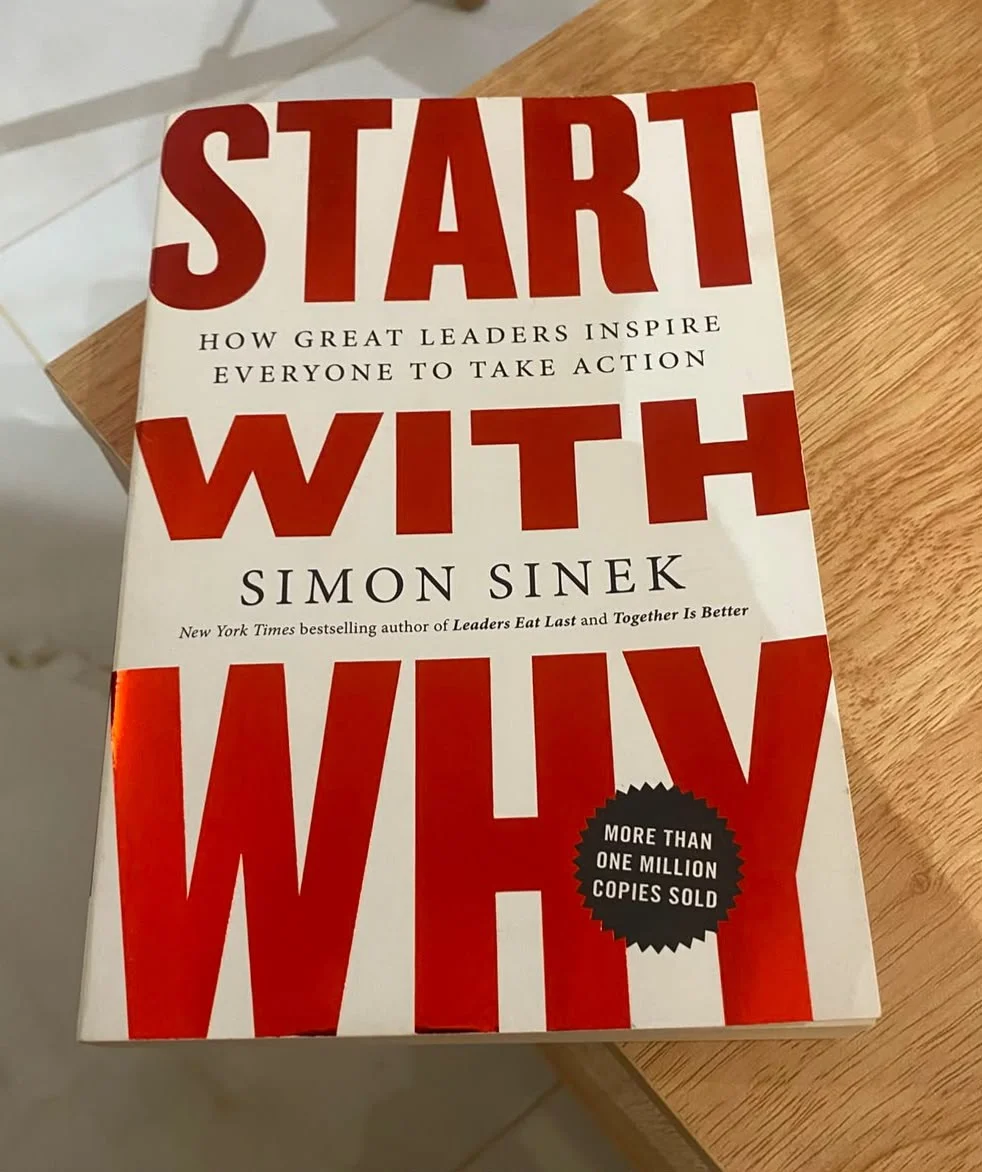
I recently finished reading Start With Why by Simon Sinek, and I came away from the book thinking about a very simple question: Why do we do what we do?
Throughout my years in program management, capacity building, training, and youth development, most of the questions I deal with every day are practical ones. What are we going to do? How are we going to deliver it? What results are we expecting? We start with the activity, move to the plan, define the indicators, implement, and eventually report on what happened.
That rhythm is part of everyday professional life. Yet, with everything moving so quickly, it becomes surprisingly easy to get absorbed in the details and lose sight of the question that should come first: Why are we doing this work in the first place?
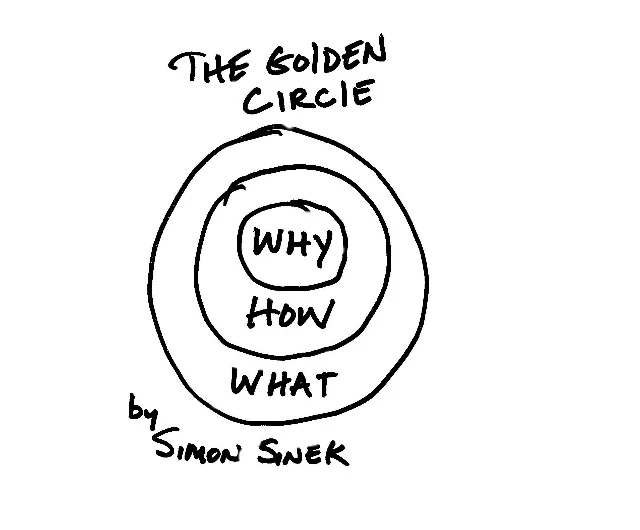
That is where the core idea of the book came back to me: The Golden Circle.
The Golden Circle: Why, How, What
Sinek presents three connected circles: Why, How, and What. What answers a straightforward question: What do we do? How explains how we do it, the approach we take, and the way we turn an idea into action. Why goes deeper. Why do we do this at all? What do we believe in? Why does this work matter to us? And what makes us want to see this change happen?
What caught my attention was the order in which we usually think. Most organizations, teams, and individuals start with the What. We identify a project, a service, a training program, or an activity, then figure out how to deliver it. After that, we try to explain why it matters. Sinek suggests starting from the inside: Why, then How, then What.
For me, this changes more than the way we communicate. It changes the way we make decisions. When your Why is clear, priorities become easier to define. Opportunities become easier to evaluate. Activities become easier to filter. You start asking whether a new idea actually supports the direction you have chosen or simply adds more work to an already busy system.
That matters a lot in our daily work because we constantly face new requests, opportunities, ideas, and competing priorities. Having a clear purpose helps us recognize the work that contributes to the goal and the work that only consumes time. In program management, this becomes even more important. We can have a strong plan, clear indicators, and well-organized implementation, yet we still need to ask one fundamental question: Is everything we are doing contributing to the change we started with?
The activity is visible. The Why gives the activity meaning.
Why the Why Shapes Decision-Making
One of the parts of the book that stayed with me was Sinek's discussion of the relationship between Why and decision-making. He connects the Why with the emotional part of the brain, particularly the limbic brain, while the analytical side of thinking deals more directly with facts, information, logic, and comparison.
This helps explain an experience many of us have had. Sometimes we know that a decision feels right before we can fully explain why. We meet someone and immediately feel that we can trust them. We receive an opportunity and instantly feel that it fits us. We compare two options that look almost identical on paper, yet something inside us keeps pulling us toward one of them. This is where the idea of gut decisions becomes interesting.
We sometimes say, “I just knew it was the right decision.” Then, after making the decision, we start building the logical explanation behind it. That does not mean every gut feeling is accurate. It means that our decisions often involve more than conscious analysis. Experience, values, memory, trust, patterns, and emotions can all shape how we respond to a situation.
Gut Decisions and the Limbic Brain
The connection between gut decisions and the limbic brain is especially interesting for leadership. In Sinek's model, the limbic brain is closely associated with emotions, values, trust, and decision-making, while the analytical side of the brain works with logic, comparison, evidence, and conscious reasoning.
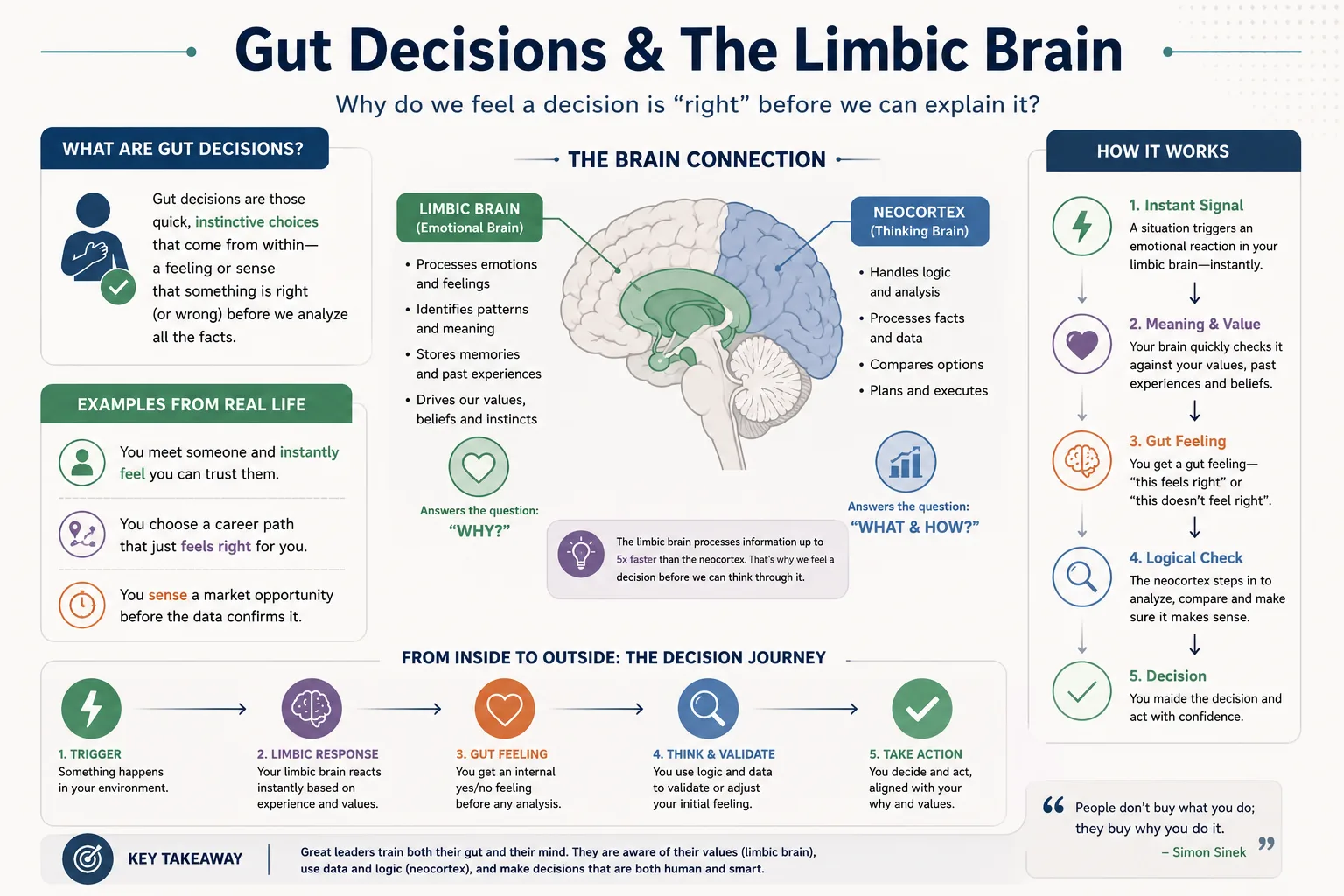
This helps explain why having all the information in front of us does not always make a decision easy. Sometimes we need to feel that a decision fits our values, our experience, and the direction we want to take. That internal feeling can be valuable, particularly when it comes from years of experience and accumulated patterns.
At the same time, this is where self-awareness becomes important. An internal feeling can come from experience, yet it can also come from fear, a previous experience, personal bias, or simply the desire to choose what feels comfortable. Understanding ourselves helps us read that signal more accurately.
For me, good decision-making is about bringing both sides to the table: listening to the internal signal and then testing it against data, experience, context, and logic. Leadership requires that balance. Leaders rarely work with perfect information. They have to read the context, understand people, assess the available evidence, and still make a decision when no option feels completely certain.
Trust your gut. Then give your mind a seat at the table.
Leadership Begins With Vision
The book then moves into the idea of vision, and this is where I saw an even stronger connection between the Why and leadership. Leadership requires the ability to see something that does not exist yet and help other people see it too.
That idea stayed with me because I increasingly see leadership as the ability to create meaning before giving instructions. A leader does not need to have every answer. A leader needs to create direction, explain why that direction matters, and build an environment where other people can contribute.
When people understand why they are doing something, they have more room to think about how they can improve it. They can suggest better solutions. They can challenge assumptions. They can make decisions that remain connected to the bigger goal. This is where leadership starts moving beyond execution and into capacity building.
Why This Matters in Youth Leadership
I see this especially clearly in my work with young people. When we give young people a specific task and ask them to execute it, they gain an implementation experience. When they understand the reason behind the task, the problem they are trying to solve, and the change they want to contribute to, the learning becomes deeper.
Young people need opportunities to participate in thinking, not only in implementation. They need space to experiment, take initiative, make decisions, learn from mistakes, and see that their contribution can influence something bigger than themselves.
This is why I believe good youth leadership creates capacity within the group rather than concentrating every answer in one person. When the leader becomes the only person who thinks, decides, and solves problems, the team gradually becomes dependent on the leader. When people understand the purpose that brings them together and have real space to contribute, leadership starts to spread across the group. That is a much stronger form of leadership.
From The Golden Circle to Ofuq
This is where the book brought me back to something I have been working on myself: Ofuq, the Leadership Guide.
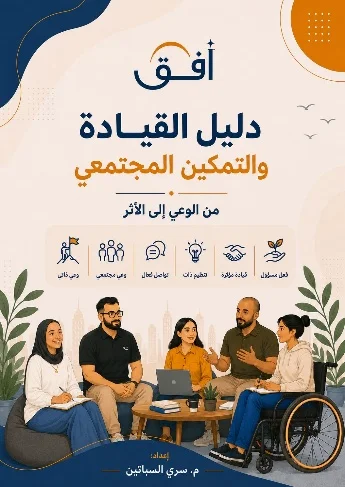
I mention Ofuq because the connection feels natural to me. When I developed Ofuq, I did not start from the idea that leadership is simply a list of skills that people need to collect. I started from the idea that there is an internal journey that comes before leadership becomes visible in our behavior.
That journey begins with Self-awareness, followed by Self-regulation, Social awareness, Communication, Responsible Action, and finally Leadership. The logic behind this sequence is simple: before I think about leading others, I need to understand myself. What drives me? What values influence my decisions? How do I respond under pressure? How do I manage my emotions? How do I understand the people around me? Only then can I move into communication, responsible action, and leadership.
This is where I see the connection with The Golden Circle. The Golden Circle starts from the inside: Why → How → What. Ofuq also starts from the inside: understanding the person, understanding how that person responds to themselves and others, and then turning that awareness into action and leadership. For me, that connection is one of the reasons the Golden Circle stayed relevant while I was thinking about Ofuq. If you want to see where that thinking led, explore the Ofuq leadership framework.
Why Do I Want to Lead?
The book also brought me back to a question that I believe every aspiring leader should ask: Why do I want to lead? It sounds simple, yet the answer can change how we understand leadership.
Do I want leadership because I want a title? Do I want to become the person making the decisions? Do I want to create a specific impact? Do I have an idea I believe in and want others to become part of it? Or have I simply become the person who is used to taking responsibility?
The answer shapes the kind of leader we become. When I understand why I want to lead, it becomes easier to understand how I want to lead, which decisions fit my values, and what kind of impact I want to leave behind. This is where purpose and leadership identity come together.
The Why Needs Clarity, Discipline, and Consistency
Another idea I found important in the book is Clarity, Discipline, and Consistency. Knowing your Why gives you direction. Practice turns that direction into something real. Clarity helps you understand what matters. Discipline turns the belief into action. Consistency allows other people to see that belief in your everyday behavior.
Anyone can talk about empowerment, participation, trust, or inclusion during a meeting or presentation. The real test comes when the decision becomes difficult. If I believe in participation, do I create real space for others to influence decisions? If I believe in youth empowerment, do young people have a meaningful role in shaping the initiatives that affect them? If I believe in teamwork, do I solve every problem myself, or do I use challenges as opportunities to build capability within the team? This is where values become behavior.
And this is where the How becomes important. The Why tells us what we believe. The How shows people what that belief looks like in practice. If I believe in youth empowerment, the How appears in program design, decision-making space, listening, facilitation, and the way I respond to young people's ideas. If I believe in participation, the How appears in meetings, roles, decision-making processes, and the space people have to challenge and contribute. Over time, consistency turns those practices into trust.
What Does This Mean for Program Design?
This idea made me think a lot about how we design programs and initiatives. Very often, we start with practical questions: How many trainings will we deliver? How many participants will we reach? How many sessions do we need? What are the required deliverables? Which KPIs (Key Performance Indicators) will we measure?
These questions matter. Yet there is another set of questions I want to place before them: Why do we want this change to happen? What problem are we trying to solve? What do we actually want to change? Why does this change matter to the people we are working with?
From there, we can think about the How, and only then define the What. This creates a stronger link between purpose, program design, implementation, and measurement. Training becomes a means to achieve a specific change. An activity becomes part of a clear logic. An indicator becomes connected to an intended result. Implementation becomes easier to adapt when the context changes.
That matters in development work because activity alone can create the feeling of progress. We can deliver ten trainings and reach hundreds of participants, then discover that the change we wanted required something different. We can also run a small activity that gives a group of young people a genuine opportunity to make a decision, build a relationship, or experience a new skill for the first time. That is why I keep coming back to the Why. It brings us back to the purpose when the details start pulling us away from it.
Activity tells us what happened. Purpose helps us understand why it mattered.
Are We Still Moving in the Right Direction?
After finishing the book, the question became bigger for me than simply “What is your Why?” The question I kept thinking about was: Is what I am doing today still connected to the reason I started?
Anyone can ask this question. An individual can ask it. A leader can ask it. An organization can ask it about its programs. A team can ask it about the work filling its calendar.
Daily work has a way of pulling our attention toward detail. KPIs (Key Performance Indicators) become part of the routine. Deliverables can start feeling like the destination. Meetings fill the calendar. Reporting becomes a rhythm. And then we need to pause and ask: Is what we are doing today actually moving us closer to the change we started with?
This is what made Start With Why feel connected to my own experience rather than simply another leadership book. In program management, I work with planning, implementation, partners, indicators, teams, and participants. In training, I think about content, methodology, facilitation, and learning. In youth development, I think about the space we create for people to participate, experiment, lead, and make decisions. Across all of these spaces, the same question keeps coming back: Why are we doing this?
Why Was the Book So Closely Connected to Ofuq?
For me, the connection between The Golden Circle and Ofuq comes down to one idea: Change starts from within, then becomes action, and eventually becomes impact.
The Golden Circle starts with Why, then moves to How, and finally to What. Ofuq starts with the person: Self-awareness, Self-regulation, Social awareness, Communication, Responsible Action, and Leadership.
I see a shared logic in that journey. Before impact becomes visible on the outside, something needs to happen on the inside. The Why helps me understand what drives me. Self-awareness helps me understand the person carrying that purpose. Self-regulation helps me turn conviction into behavior. Social awareness and communication help me share that conviction and build relationships with others. Responsible action and leadership then become part of the journey.
That is one of the reasons I wanted to bring the Golden Circle into the conversation around Ofuq. For me, leadership starts before the job title, before managing a team, and before making decisions on behalf of others. It starts with understanding ourselves, understanding what we believe in, and understanding why we want our work to leave an impact.
The Question I Took With Me
The biggest thing I took from Start With Why is that the Why needs to stay present while we work. It is there when we make decisions, when we design programs, when we lead teams, when we work with young people, and when we stop to ask whether we are still moving in the direction we believe in.
The Why gives work meaning and direction. The How turns that meaning into a way of working. The What makes the idea visible in the real world. That is what made the relationship between The Golden Circle and Ofuq so clear to me. Both begin from within, then move outward into behavior, action, and impact.
And perhaps the most useful question to carry forward from the book is also the simplest:
Why are we doing this?
The answer can change how we make decisions, how we design programs, how we approach leadership development, how we work with young people, and even how we understand ourselves. Because sometimes the most important step in moving forward is taking a moment to remember why we started.
Related reading: see also why most leadership programs fail, or explore Ofuq, the leadership framework this thinking feeds into.
Frequently Asked Questions
Found this useful? Share it with your network.
 Share on LinkedIn