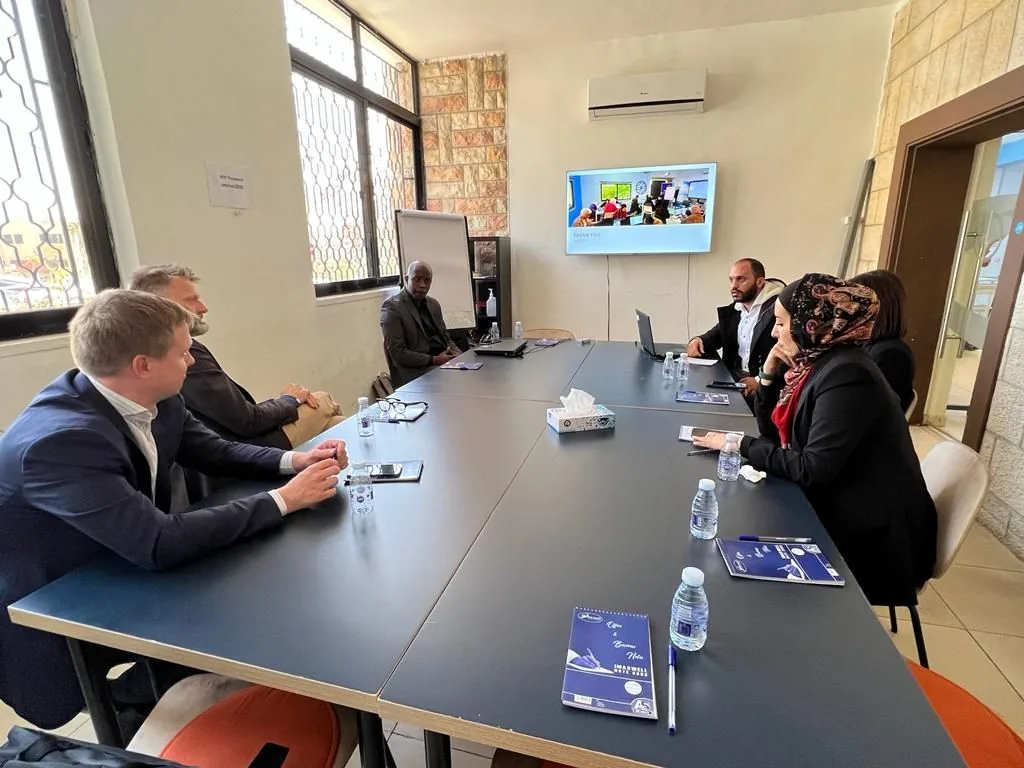
When I took on a program with a budget exceeding two million dollars, spread across four international donors, I thought the hardest part would be the work itself.
It was not.
The hardest part was managing four organizations that each had their own priorities, their own reporting formats, their own definitions of success, and their own timelines.
That experience taught me more about program management than any certification or training ever did.
On paper, the program looked straightforward. One consortium, one set of objectives, one youth-focused mission. In practice, I was coordinating with ActionAid, Oxfam, Plan International, and Good Neighbors at the same time, each of them accountable to a different set of internal stakeholders, each of them using a different results framework, and each of them expecting the program to reflect their own institutional language.
A budget of two million dollars does not come with two million dollars of trust. It comes with four separate systems of accountability that all need to be satisfied at once.
The first lesson I learned is that alignment has to happen before implementation, not during it. In the early weeks, I spent far more time in coordination meetings than I expected. Donor A wanted quarterly narrative reports structured around outcome indicators. Donor B wanted monthly financial reconciliations. Donor C cared primarily about beneficiary-level data disaggregated by gender and location. Donor D wanted visibility for their brand in every public-facing activity.
None of these requirements were unreasonable on their own. The difficulty was building a single operating system that could satisfy all four without duplicating effort four times over.
Build One Source of Truth
The single decision that saved the program was building one internal monitoring system that could be sliced and reformatted for each donor, rather than running four parallel tracking processes. Every activity, every participant, every output was logged once, in a structure detailed enough to be repackaged into whatever format a specific donor needed.
This sounds obvious in hindsight. It was not obvious in month one, when every partner organization was asking for updates in their own preferred format and the instinct was to simply produce four different documents from scratch each time.
Reporting is not the same as truth-telling. You can tell the truth four different ways without lying once, as long as the underlying data is consistent.
Budgets Are Relationships, Not Spreadsheets
The second lesson was about money. Managing a multi-donor budget means constantly reconciling different fiscal years, different disbursement schedules, and different rules about what counts as an eligible cost. A training venue that one donor happily covers might fall outside another donor's approved budget lines entirely.
I learned to treat every line item as a conversation rather than a fixed rule. When a cost fell into a gray area, the fastest path forward was almost never a unilateral decision. It was picking up the phone, explaining the context, and finding a version of the activity that worked within everyone's constraints without compromising the quality of delivery.
This required patience that no training course prepares you for. It also required something more important: the credibility to be trusted with that flexibility in the first place, which only comes from a track record of transparent, accurate reporting.
The Real Skill Is Translation
If I had to name the single skill that mattered most in that program, it would not be budgeting, and it would not be Gantt charts. It would be translation.
Translating a donor's technical language into something a field team could act on. Translating a field team's realities into something a donor's headquarters could understand and approve. Translating a delay into a defensible, honest explanation rather than an excuse.
The program did not fail or succeed based on the framework I used. It succeeded because someone was constantly translating between four different worlds that would otherwise never have understood each other.
Looking back, managing that budget taught me that program management at scale is not primarily a technical discipline. It is a relational one. The Gantt chart tells you what should happen. It says nothing about the diplomacy required to keep four donors, dozens of staff, and thousands of participants moving in the same direction.
That is the part no certification can teach you. You only learn it by sitting in the room, disorganized and stretched thin, until you find a way to make it work.
Related reading: See also AI and Entrepreneurship in the MENA Region, or explore our program management services.
Frequently Asked Questions
Found this useful? Share it with your network.
 Share on LinkedIn