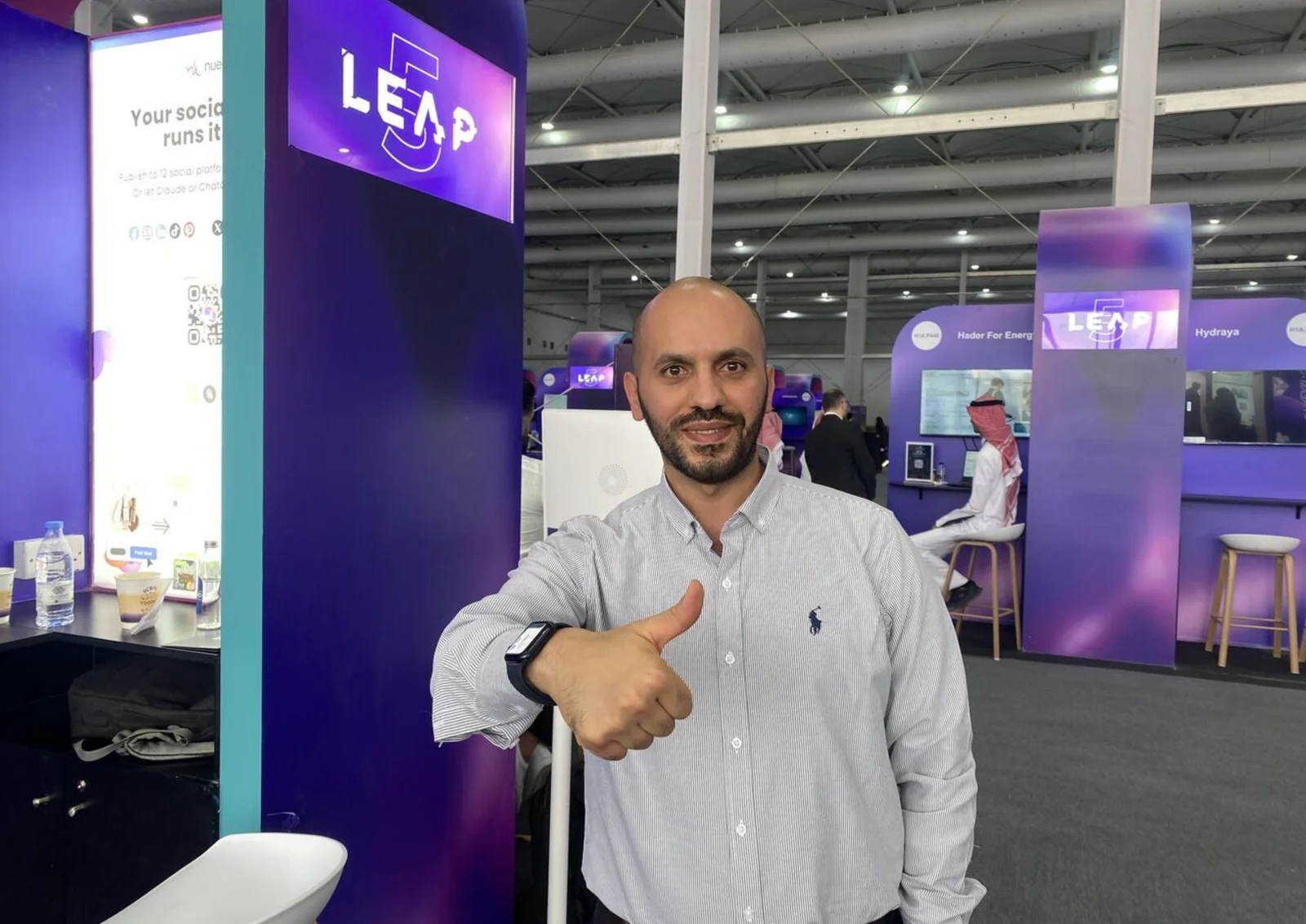
What LEAP Is, and Why It Matters
Every year, Riyadh brings together thousands of leaders, founders, investors, technology companies, government entities, and innovators from around the world through LEAP, one of the world's major technology, innovation, and entrepreneurship events. Across several days, Riyadh becomes a dense meeting point for ideas, investment, partnerships, emerging technologies, and conversations that can move businesses forward.
During my experience at LEAP, I noticed how quickly everything moves. Back-to-back meetings, panels, packed booths, short introductions, and conversations that begin in the corridors and continue afterwards. Everyone seems to have a goal. An investor is looking for an opportunity, a founder is looking for funding or a customer, a company is looking for technology, and a leader is looking for ideas that can shape better decisions.
What Do You Actually Want to Achieve?
That led me to a question that I believe anyone attending LEAP should ask before arriving: What do you actually want to achieve there? The difference between attending and having a clear objective is significant. When you know what you are looking for, sessions become more relevant, meetings become more focused, and every hour becomes more valuable.
The Panels That Shaped My Experience
For me, I followed topics that connect closely with leadership and organizational growth: emerging markets and investment, board leadership, sports and entertainment, space communications, smart cities, and startup ecosystems. That variety became one of the most valuable parts of the experience because each topic offered another lens for understanding how people, companies, markets, and ecosystems scale.
I attended conversations around emerging markets and investment, discussions about the leverage created by effective boards, and sessions covering the future of sports and entertainment, space communications, smart cities, and startup ecosystems. Each session had its own subject, yet I kept seeing the same wider question: How do we build environments that help people, companies, and ideas grow?
Why Application Matters More Than Attendance
This is where Application becomes important. The value of a conference is not the number of sessions you attend or the amount of information you collect. The value appears in what you do with it afterwards. A session about AI can change how you build capabilities in your team. A discussion about smart cities can reshape how you think about customer experience. A conversation about startups can give you a new way to think about partnerships, talent, and growth.
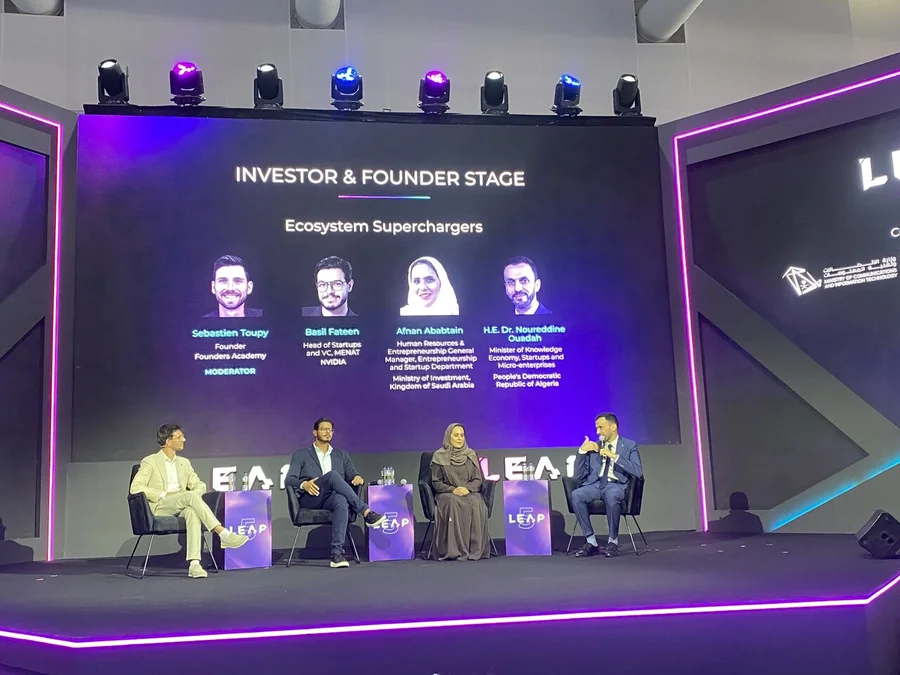
The Investor & Founder Stage at LEAP: one of the panels on ecosystem building I followed closely.
As a leader, I find this especially important. Sometimes we need to step outside our own field to understand our own work better. An idea from a completely different industry can help you improve a team, make a stronger decision, or rethink how a project should be managed. Learning becomes valuable when the idea moves from the stage into practice.
The Value of Time and the Elevator Pitch
Another lesson that became very clear to me at LEAP was the value of time. You may stop with an investor in a corridor, meet a potential customer at a booth, or run into a strategic partner between sessions. In that moment, you may have only 30 seconds before the other person has to move on.
That is where the Elevator Pitch matters. Thirty seconds is not enough to explain your entire company. It is enough to make someone understand what you do, who you serve, what problem you solve, and what value you create.
The goal is to earn the next conversation, to create enough clarity and curiosity for the other person to say: Tell me more.
How Startups Should Prepare
This is one of the areas where I believe startups can get much more value from LEAP. A good idea is not enough. You need to know how to explain it. Knowing your product is not enough. You need to explain why the customer should care. Talking about market size is not enough. An investor needs to understand the growth opportunity, the business model, and the potential return.
When you meet an investor, frame the opportunity around growth and return. When you meet a customer, explain the problem you can solve and the outcome you can create. When you meet a potential partner, make the logic of the collaboration clear. Every person has a different motivation, so your message should make sense to the person standing in front of you.
This is why preparation for LEAP starts before you enter the venue. Know who you want to meet and why. Know what you can contribute. Know what you want to learn. Prepare your message, sharpen your pitch, and make sure you can explain your idea with clarity and confidence. It is the same clarity I try to build with leaders through the Ofuq framework: knowing yourself and your value well enough to communicate it under pressure.
Where the Best Conversations Happen
My experience also reminded me that some of the most valuable conversations happen outside the schedule. A quick exchange at a booth, a discussion after a panel, or a conversation with someone you happen to meet on the way to a session can open a new door. You cannot plan every opportunity, but you can be ready when one appears.
Everyone Is Looking for a Deal
There is another reality at LEAP: everyone is looking for a deal. That commercial energy is part of what makes the event so dynamic. Investors are sourcing opportunities, startups are looking for funding, companies are looking for solutions and partnerships, and almost every conversation has the potential to move somewhere.
Yet every deal starts with clear value for both sides.
For that reason, I find it useful to start with another question: What value can I create for this person? What problem can I help solve? What can I contribute? What would make it logical for the conversation to continue?
That mindset changes networking. You stop collecting names and start looking for genuine intersections that can become collaboration, opportunity, or a long-term professional relationship. It is a theme I keep coming back to in how AI is reshaping the startup ecosystem across MENA: the founders who get real traction are the ones building for someone, not just building.
LEAP as a Leadership Observation Platform
From a leadership perspective, LEAP can also be a powerful observation platform. You can see how companies position themselves, what technologies attract attention, how investors think about opportunities, what markets are asking for, and how different sectors describe the future. That perspective can influence decisions you make long after you leave Riyadh, in the same way I think about how human capital is changing across the Gulf.
Why Real Success Starts After LEAP
For me, this was one of the strongest outcomes of the experience. I came away with many ideas, but the bigger value was the questions I started asking about my own work. What can I apply? Where can I improve? What is changing in the market? How can I use these shifts to build stronger teams, capabilities, and opportunities?
That is why I would not measure LEAP by the number of business cards collected or sessions attended. I would measure it by what happens afterwards. Did you follow up with someone you met? Did a conversation open? Did a new opportunity appear? Did you return to your team with an idea and actually apply it?
Real value starts after LEAP.
If you are planning to attend LEAP, spend time preparing yourself, not only your schedule. Prepare your idea, your message, your value proposition, your questions, and your objectives. The right investor, customer, partner, mentor, or opportunity may appear in a moment you did not plan for, and you may have only 30 seconds to earn their attention.
LEAP gives you access to exceptional people, ideas, and opportunities. What you do with that access determines the value you create from the experience.
That is the biggest lesson I am taking from LEAP: do not go simply to participate. Go knowing why you are there, who you want to meet, what you want to learn, what you can offer, and what you want to take with you when you leave.
Related reading: see also how AI and entrepreneurship are converging in MENA, or explore human capital in the Gulf's new era.
Frequently Asked Questions
Found this useful? Share it with your network.
 Share on LinkedIn