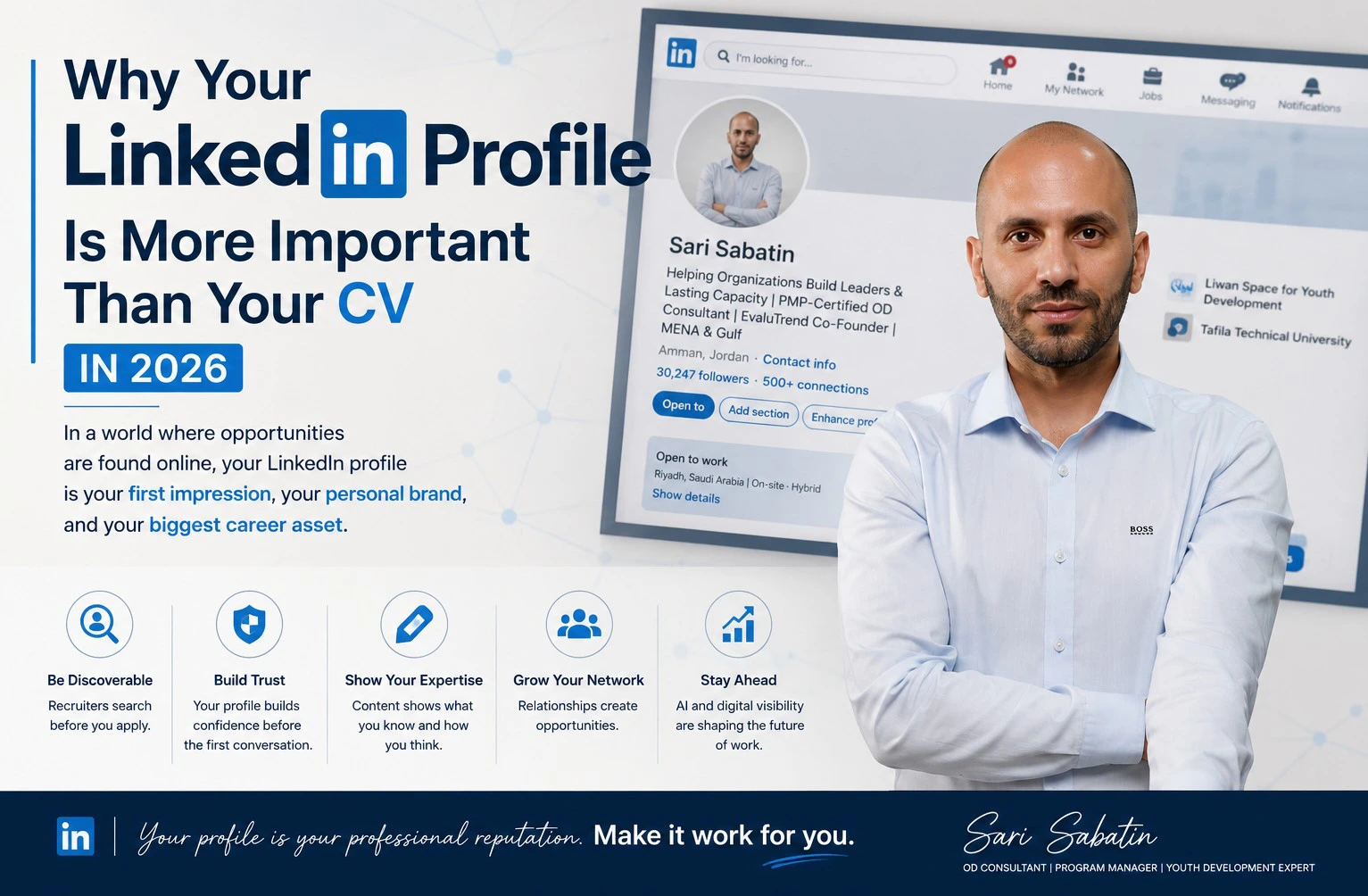
There was a time when your CV was the first thing employers wanted to see. It was the document that introduced your experience, qualifications, and achievements. Today, that reality has changed.
In 2026, your LinkedIn profile is often your first interview before anyone contacts you. Whether you're applying for a new role, building your consulting business, seeking partnerships, or simply growing your professional network, people are far more likely to search your name on LinkedIn than ask for your CV.
Recruiters, hiring managers, clients, investors, and even conference organizers all share one habit: they research people before reaching out. What they discover online often shapes their first impression long before a conversation begins.
Your CV still matters, but it is no longer the center of your professional identity. Your LinkedIn profile has become your digital reputation.
Recruiters Search for Talent Instead of Waiting for Applications
Recruitment has become increasingly proactive. Rather than waiting for hundreds of applications, organizations now search directly for professionals who match the skills they need. This means opportunities often find people before people start looking for opportunities.
A recruiter searching for a Project Manager, Organizational Development Consultant, Learning & Development Specialist, or Sustainability Expert is unlikely to begin with email inboxes. Instead, they use LinkedIn's search tools to identify professionals whose profiles clearly communicate their expertise.
An updated profile filled with relevant experience, measurable achievements, and industry-specific keywords significantly increases your visibility. If your profile is incomplete or outdated, you may never appear in those searches even if you are highly qualified. Being discoverable has become just as important as being experienced.
Your Professional Story Deserves More Than Two Pages
A CV has always been limited by space. Most professionals try to summarize years of experience in one or two pages, often leaving out valuable projects, volunteering, speaking engagements, publications, and professional achievements.
LinkedIn removes those limitations. Instead of reducing your career to bullet points, it allows you to present the full picture of who you are as a professional. You can explain the impact of your work, showcase projects, highlight certifications, publish articles, share presentations, and feature recommendations from colleagues or clients.
People no longer want to know only where you worked. They want to understand how you think, what problems you solve, and the value you consistently create.
Trust Is Built Before the First Conversation
One of the biggest changes in today's professional world is that trust starts online. Before scheduling interviews, awarding consulting contracts, or inviting someone to speak at an event, decision-makers usually spend a few minutes reviewing their online presence.
An active LinkedIn profile tells a much richer story than a CV ever could. It reveals your recent activities, the conversations you participate in, the ideas you share, and the people who engage with your work.
People naturally feel more confident connecting with someone whose expertise is visible rather than simply listed.
Your Content Speaks for You Every Day
Perhaps the biggest advantage LinkedIn offers is the ability to demonstrate expertise instead of merely claiming it. Every article you publish, every thoughtful post you share, and every meaningful discussion you participate in becomes part of your professional identity.
Imagine two candidates with similar qualifications. One has an excellent CV but rarely shares knowledge online. The other regularly publishes insights on leadership, project management, organizational development, or industry trends. Who appears more knowledgeable? In many cases, the answer is obvious.
Consistent content helps people understand your thinking before they ever meet you. It transforms your profile from a static resume into a living portfolio of ideas and experience.
Networking Has Become Continuous
Traditional networking often depended on conferences, meetings, or exchanging business cards. LinkedIn has changed that completely. Today, networking happens every day through conversations, comments, shared insights, and introductions.
A single interaction with the right person can lead to new projects, consulting opportunities, speaking invitations, or long-term partnerships. The strongest professional relationships rarely begin with a formal job application. More often, they begin with a conversation.
Your Profile Works Even When You Don't
Unlike a CV that remains stored in a folder until you send it, your LinkedIn profile is always available. While you are travelling, attending meetings, or focusing on your current work, your profile continues introducing you to people around the world.
Someone in another country may discover your experience, read one of your articles, review your recommendations, and decide to contact you, all without you taking any action. In many ways, LinkedIn has become the hardest-working member of your professional team.
Artificial Intelligence Is Changing How Professionals Are Found
The growing use of artificial intelligence in recruitment has changed how profiles are evaluated. Modern hiring platforms increasingly analyze skills, career progression, keywords, certifications, and professional activity to identify suitable candidates.
Optimizing your LinkedIn profile is no longer just about impressing people. It is also about making your expertise understandable to intelligent search systems.
Your Personal Brand Is Becoming Your Competitive Advantage
Technical skills are still essential, but they are no longer enough to stand out. People increasingly choose to work with professionals they know, trust, and recognize.
Your LinkedIn profile communicates more than your experience. It reflects your communication style, professional interests, leadership philosophy, and commitment to continuous learning. Every recommendation, every article, and every thoughtful contribution strengthens your personal brand, and over time, that brand becomes one of your most valuable professional assets.
Final Thoughts
The question is no longer whether you need LinkedIn. The real question is whether your LinkedIn profile accurately represents the professional you have become.
Your CV still plays an important role in recruitment, but it is no longer the first place people look. In today's professional world, opportunities are often created long before an application is submitted. A well-maintained LinkedIn profile opens doors to conversations, partnerships, consulting opportunities, and career growth that a traditional CV simply cannot.
Invest time in building your professional presence online. Share your knowledge. Document your achievements. Stay visible. Because in 2026, your LinkedIn profile is no longer just part of your career, it is your career's first impression.
Related reading: See also Human Capital in the Gulf's New Era, or explore our full range of services.
Frequently Asked Questions
Found this useful? Share it with your network.
 Share on LinkedIn